Sting Interceptor Drone Price and Combat Record
The Sting interceptor drone, built by Ukraine's Wild Hornets to shoot down Shahed-type attack drones, costs roughly $2,000 to $2,500 per unit in published reporting. Wild Hornets put the price at $2,500 per interceptor to Business Insider in August 2025, and Reuters reported around $2,000 or less in March 2026.
Reuters gives a top speed of up to 280 km/h (174 mph). A Wild Hornets spokesman told The War Zone that pilots fly the Sting manually.
Sting interceptor at a glance
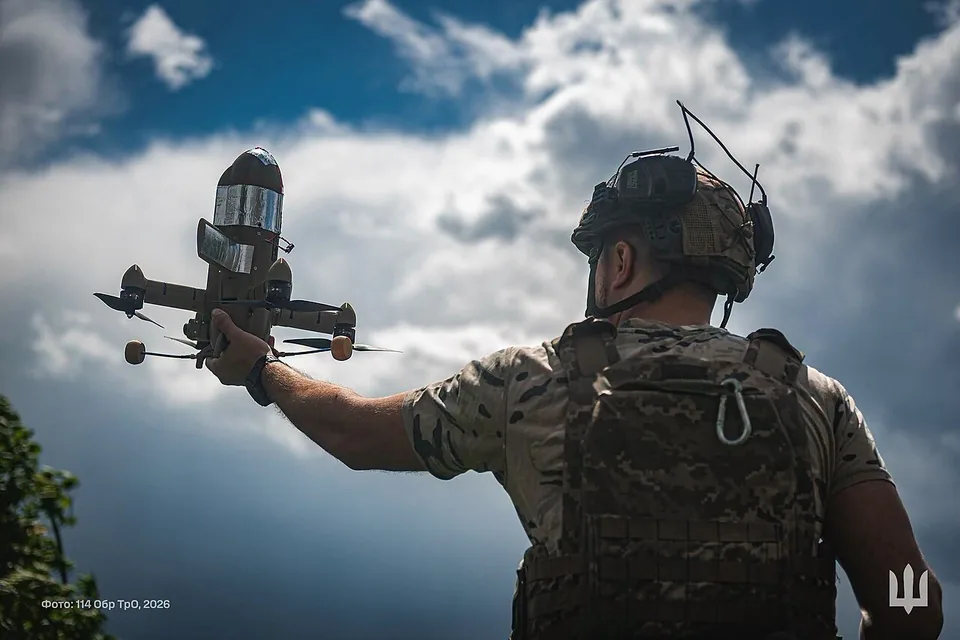
| Manufacturer | Wild Hornets (Ukraine) |
|---|---|
| Origin | Ukraine |
| Category | Counter-UAS interceptor |
| Role | Quadcopter interceptor drone built by Ukraine's Wild Hornets to destroy Russian Shahed and Geran-type one-way attack drones in flight at a fraction of an air-defense missile's cost. |
| Aliases | Sting · Wild Hornets Sting |
| Evidence status | Confirmed system use |
What the public record establishes
Every Sting combat figure comes from Wild Hornets or Ukrainian sources. None has been independently verified. Wild Hornets told Reuters, as published by Al-Monitor, that the Sting has downed more than 3,000 Russian Shaheds since entering regular service in June 2025.
Wild Hornets said on Telegram that Sting interceptors shot down more than 3,000 Shahed and Gerbera drones in May 2026 alone, per Ukrainska Pravda. Citing the outlet Oboronka, Kyiv Post reported in September 2026 that Ukrainian units had used Sting interceptors to destroy more than 11,000 Shahed, Geran and Gerbera-family drones since the start of 2026.
Kyiv Post also reported a 1020th Anti-Aircraft Missile and Artillery Regiment video of a crew using the newer STING S to destroy a Russian Geran-5. Kyiv Post could not verify the time or location.
The distinction between platform identity and event attribution matters. A manufacturer page can establish what a drone is; an official military release, UN report, or conflict-monitoring source is needed to establish where it appears in a war. Where those records do not align, this page keeps the uncertainty visible.
This is a non-operational reference page. It explains the manufacturer, platform family, and public conflict record without providing instructions for building, targeting, deploying, or modifying a weapon system.
Sting Interceptor Drone Price and Specs
The Sting interceptor drone is priced at roughly $2,000 to $2,500 per unit in published reporting. Its stated top speed runs from over 160 km/h to 315 km/h, depending on the source and the version. No source used here publishes a Wild Hornets price list or a Ukrainian Ministry of Defence contract price.
Every price below is either a Wild Hornets statement to a reporter or a journalist's figure.
Speed, range and ceiling figures also differ by outlet and by date. The table gives each figure with the outlet that published it, and figures that Kyiv Post labels unofficial are marked that way.
| Parameter | Figure | Source |
|---|---|---|
| Unit price | $2,500 per interceptor | Wild Hornets via Business Insider, Aug 2025 |
| Unit price | About $2,100 to $2,500 | DroneXL, Mar 2026 |
| Unit price | About $2,000 | Kyiv Post, Mar 2026 |
| Unit price | Around $2,000 or less | Reuters via Al-Monitor, Mar 2026 |
| Top speed | Over 160 km/h (100 mph) | Kyiv Post, Oct 2024; Militarnyi, Feb 2025 |
| Top speed | Up to 173 mph | Wild Hornets via The War Zone, Mar 2026 |
| Top speed | Up to 280 km/h (174 mph) | Reuters, Mar 2026; Kyiv Post (unofficial), Sep 2026 |
| Top speed (test claim) | Up to 195 mph in stable flight; 315 km/h on the FPV counter | Wild Hornets via Business Insider, Aug 2025 (not independently verified) |
| Cruising speed | 140 to 170 km/h | Kyiv Post (unofficial), Sep 2026 |
| Range | Up to 25 km | dev.ua citing Militarnyi, Nov 2025; Kyiv Post (unofficial), Sep 2026 |
| Range | About 37 km | Reuters, Mar 2026; Kyiv Post says newer variants, Sep 2026 |
| Altitude | About 3,000 m | Kyiv Post, Oct 2024; Militarnyi, Feb 2025 |
| Ceiling | Above 7,000 m; record interception at 7,472 m | Kyiv Post (unofficial) and Oboronka via Kyiv Post, Sep 2026 |
| Hit accuracy | 80 to 90% | Kyiv Post (unofficial), Sep 2026 |
| Size | Fits inside a backpack; about the size of a coffee machine | Wild Hornets via The War Zone; Kyiv Post, Mar 2026 |
| Launch | No catapult; any flat surface | dev.ua citing Militarnyi, Nov 2025 |
How Much Does a Sting Interceptor Drone Cost?
A Sting interceptor drone costs about $2,000 to $2,500 by published figures, and Wild Hornets itself gave a price of $2,500 per interceptor to Business Insider in August 2025. In March 2026, DroneXL put the Sting at roughly $2,100 to $2,500, Kyiv Post said about $2,000, and Reuters said around $2,000 or less. None of these outlets explains why the figures differ.
Relative-cost claims disagree with each other. Kyiv Post wrote in October 2024 that the Sting costs one-tenth of a Shahed, which it valued at upwards of $50,000, and up to 1/1,000th the cost of a Patriot missile. A Wild Hornets source told Business Insider the same month that the average cost was "dozens of times lower" than a Shahed.
A Wild Hornets representative told Militarnyi in February 2025 that the average Sting costs ten times less than a Shahed.
One-tenth of $50,000 is $5,000, double the $2,500 Wild Hornets later quoted. Reuters puts a Shahed at $20,000 to $50,000, so a $2,000 Sting would cost between one-tenth and one twenty-fifth of a Shahed.
The next model is expected to cost more. Unmanned Airspace reported that Sting 2.0 should cost about 30% more than the standard version, and no source publishes a Sting 2.0 price.
How Fast Is the Sting Interceptor?
The in-service Sting reaches up to 280 km/h (174 mph) according to Reuters, and Wild Hornets told The War Zone in March 2026 that it reaches up to 173 mph. Those two March 2026 figures are the closest published numbers for the standard model.
Earlier claims were lower. Kyiv Post and Militarnyi described a drone that could exceed 160 km/h and climb to about 3,000 meters. Business Insider, citing The Telegraph, said in October 2024 that the Sting was built to fly faster than 100 mph at about 10,000 feet, with top speed unclear at the time.
For context, Business Insider reported that Ukraine's BRAVE1 programme set a minimum interceptor requirement of 60 mph at 5,000 feet in early 2024.
Higher figures come from tests and variants. Wild Hornets told Business Insider in August 2025 that the Sting reached up to 195 mph in stable flight. Wild Hornets also said its first-person-view (FPV) speed counter showed up to 315 km/h, a figure Business Insider could not verify.
Kyiv Post reported that Defense Express said an updated Sting exceeded 315 km/h in late August 2025, a figure Wild Hornets did not announce. Kyiv Post also reported that a "Werewolf" Sting variant reportedly reaches over 300 km/h.
Who Makes the Sting Interceptor
Wild Hornets, a Ukrainian drone maker that began as a volunteer effort in 2023, designs and builds the Sting. Kyiv Post described Wild Hornets in 2024 as a volunteer group founded in spring 2023 in response to calls from Ukraine's armed forces for more drones. In 2026, Kyiv Post called Wild Hornets a nonprofit charitable fund founded in early 2023 that crowd-sourced drones for troops.
Other outlets label Wild Hornets differently. Business Insider calls it an engineering nonprofit, Militarnyi a "volunteer team", and Reuters a "private firm". None of the sources used here describes Wild Hornets as listed on a stock exchange.
Kyiv Post reported that Wild Hornets' output grew from tens of drones a month in 2023 to hundreds and then thousands. Co-founder Dmytro Prodanyuk told Kyiv Post in October 2024 that more than 25 engineers produced around 100 drones per day. Business Insider reported that Wild Hornets says it has delivered about 14,000 drones to Ukrainian troops since early 2023.
The Associated Press (AP) reported, via Fortune, that Odd Systems supplies cameras for Wild Hornets interceptors.
How Sting Is Used, at a High Level
The Sting is a piloted interceptor that Wild Hornets positions as a supplement to Ukraine's air defense against Shahed-type drones. Militarnyi says Wild Hornets developed it as a cheaper alternative to anti-aircraft missiles.
Kyiv Post described a standard quadcopter frame with a centrally mounted, elongated dome-shaped warhead and a guidance camera on top, flown from the ground by an operator wearing virtual reality (VR) goggles. Wild Hornets spokesman Alex Roslin told The War Zone in March 2026 that Sting interceptors are manually operated by pilots.
In 2024, Wild Hornets said it was developing an artificial intelligence (AI) add-on for target identification and lock-on, and no later source used here reports that it entered service.
According to dev.ua citing Militarnyi, the Sting launches without a catapult from any flat surface, and a "Night Hornets" training centre has opened with an operator course of up to three days. Kyiv Post reported in September 2026 that Wild Hornets' "Hornet Vision Ctrl" technology lets operators control interceptors through ground stations from distant locations.
Sting Combat Record Claims
Every Sting kill total comes from Wild Hornets or Ukrainian sources, and none has been independently verified. Business Insider reported in August 2025 that Ukrainian pilots had reportedly destroyed about 100 Shahed drones with the Sting. dev.ua, citing Militarnyi, reported in November 2025 that Wild Hornets claimed more than 1,000 enemy drones downed in four months of serial production, almost half of them in October 2025.
The 2026 totals are hard to reconcile. Wild Hornets told Reuters in March 2026 that the Sting had downed more than 3,000 Shaheds since June 2025. Wild Hornets later said on Telegram that Sting interceptors downed more than 3,000 Shahed and Gerbera drones in May 2026 alone. No source explains the counting method.
Oboronka, via Kyiv Post, put the total at more than 11,000 Shahed, Geran and Gerbera-family drones since the start of 2026.
Share-of-interception claims also differ. Wild Hornets says the Sting carries out at least half of interceptions. Kyiv Post reports that the Ukrainian Air Force puts the share of Shaheds downed by interceptor drones of all types at about one in three. Ukraine's Defence Ministry reported 8,150 launches of Shahed, Gerbera, Italmas and other drones in May 2026, with 7,476 intercepted (91.73%), according to Ukrainska Pravda.
The 91.73% figure covers all means of air defense and does not isolate the Sting.
Claims against jet-powered drones are newer. Wild Hornets says, per Unmanned Airspace, that it has video confirmation of about 50 jet-powered Shahed kills by the current Sting. Kyiv Post reported that the STING S had destroyed about 10 Geran-4s and several Geran-5s in combat trials. For the main target, see the Shahed-136 and Geran-2 profile.
Sting Production and Export Status
Serial production of the Sting launched in 2025 after more than a year of development and "hundreds of thousands of dollars" of investment, according to dev.ua citing Militarnyi. Reuters dates regular service to June 2025, while dev.ua's November 2025 report of four months of serial production points to about July 2025.
Wild Hornets told Reuters its output is more than 10,000 units per month, a Wild Hornets figure with no independent count behind it. In November 2025, dev.ua, citing Militarnyi, reported Wild Hornets' statement that production scaling allows thousands of units per month. Reuters reported that buyers are Ukraine's government defense-tech incubator or prominent private charities.
Business Insider noted that President Zelenskyy had set a goal of building 1,000 interceptor drones daily.
Exports were restricted as of March 2026. AP reported that Kyiv banned weapons exports when the full-scale war began in 2022. Three Ukrainian producers told AP that the U.S., UAE, Bahrain, Saudi Arabia and Qatar have made repeated requests for Ukrainian interceptor drones. DroneXL says each government-to-government sale needs presidential authorisation.
Roslin told The War Zone that "exports of drones are not permitted at this time" and that Wild Hornets could supply foreign nations if the law changed.
After the Wall Street Journal (WSJ) reported Saudi Aramco talks, Wild Hornets called that report "inaccurate" to Kyiv Post and said it is not negotiating with any Persian Gulf country or company. Wild Hornets told Reuters it has received requests but is "not reacting to them for now", and told Kyiv Post its efforts are focused on cooperation with the Armed Forces of Ukraine.
How Much Does an Interceptor Drone Cost?
Ukrainian low-cost interceptor drones are priced at roughly $1,000 to $2,000, according to AP reporting published by Fortune in March 2026. By that measure, the Sting's published $2,000 to $2,500 price sits at or above the top of the range AP gives.
Kyiv Post's October 2024 comparison put the Sting at up to 1/1,000th the cost of a Patriot missile, which frames the price against missile-based air defense. For per-kill economics across systems, the cost-per-intercept guide sets these numbers side by side.
Other Ukrainian interceptors have their own profiles: the SkyFall P1-SUN, the Octopus interceptor and the LITAVR interceptor. The Ukrainian interceptor drones hub groups them in one place.
What Is Not Published About Sting
No official Wild Hornets price list or Ukrainian Ministry of Defence contract price for the Sting appears in any source used here. The date, unit and place of the first Sting kill of a Shahed are also not established in these sources.
No kill total has independent verification, and the more than 10,000 units per month that Wild Hornets gave Reuters is not a measured production count. No source used here reports an approved export contract, a foreign delivery, or a U.S. government purchase or test of the Sting.
Specifications for the STING S and Sting 2.0 are withheld. Kyiv Post reported that STING S figures will stay undisclosed until mass production starts. A Wild Hornets representative told Reuters the second-generation model's specifications are kept secret. To weigh the Sting's $2,000 to $2,500 price against other options, read the cost-per-intercept guide.
Wars covered
- Russia–Ukraine War — 2014–present; full-scale invasion from February 2022
Sting interceptor FAQ
Who makes the Sting interceptor?
Wild Hornets (Ukraine)
Where has the Sting interceptor been documented?
Russia–Ukraine War
Is the Sting interceptor identification fully confirmed?
Confirmed system use. This status applies to the level of evidence described on this page, not to every individual battlefield claim.
Primary and monitoring sources
- Business Insider (via AOL) on the $2,500 Sting Interceptor (monitoring)
- Reuters via Al-Monitor on Ukrainian Interceptor Drones (monitoring)
- Kyiv Post on the Sting's Introduction (monitoring)
- Kyiv Post on Wild Hornets Denying Aramco Talks (monitoring)
- Kyiv Post on the STING S and Geran-5 (monitoring)
- The War Zone on Interceptor Export Restrictions (monitoring)
- dev.ua on Sting Serial Production (monitoring)
- Unmanned Airspace on Sting 2.0 (monitoring)