DJI ban explained: what the FCC Covered List actually does
A DJI ban question usually means the FCC Covered List update for foreign-made uncrewed aircraft systems, not a blanket ban on drones already in U.S. hands.
What “DJI ban” usually means in 2026
A DJI ban search usually points to the Federal Communications Commission Covered List rules for foreign-produced uncrewed aircraft systems, not a single statute titled “DJI ban.”
On December 22, 2025, the FCC updated the Covered List after a national-security determination that foreign-produced UAS and UAS critical components pose unacceptable risks.
The practical effect for new models is an equipment-authorization freeze: most new RF devices need FCC authorization before import, marketing, or sale in the United States.
What the Covered List does and does not do
| Question | Covered List answer | Why it matters |
|---|---|---|
| New foreign-produced UAS models? | Generally blocked from new FCC equipment authorization. | Next-gen DJI and other foreign models cannot enter the U.S. market the usual way. |
| Already-authorized models? | Import, sale, and use of previously authorized models are not prohibited by the Covered List addition itself. | Many consumer explainers blur this line. |
| Drones already owned? | Continued use of lawfully purchased, previously authorized devices is not restricted by the Covered List. | Possession is not the same as new-model authorization. |
| Federal-only systems? | Drones made exclusively for federal government use generally do not need FCC equipment authorization. | Defense procurement uses other sourcing rules. |
Why DJI is the brand people name
People say DJI ban because DJI is the dominant foreign consumer and enterprise drone brand in U.S. awareness.
The Covered List entry is written as foreign-produced UAS and critical components, plus equipment named in Section 1709 of the FY2025 NDAA, not as a one-company trademark statute.
The information-gain point is the authorization freeze: the FCC FAQ states additions do not prohibit import, sale, or use of existing device models the FCC previously authorized. Evidence status: that is the FCC’s published FAQ framing, not a prediction about a future enforcement action or a private seller’s inventory.
The authorization gate is the key policy mechanism
The Covered List works through the Federal Communications Commission equipment-authorization system. A radio-frequency device normally needs authorization before it can be imported, marketed, or sold in the United States. The FCC’s UAS FAQ says a covered foreign-produced UAS cannot receive that new authorization unless an exemption applies.
That is narrower than a possession ban and broader than a procurement preference. It affects the route a newly introduced product takes to market. It does not, by itself, answer whether a city agency, a contractor, an insurer, or a retailer will impose an additional rule. Those are separate screens with separate documents.
Read the FCC FAQs alongside the December 22, 2025 update. The FAQ is useful for practical questions; the update establishes the policy event. Neither is a substitute for legal advice on a particular import or contract.
Existing fleet, replacement, and new-model questions differ
A buyer with an existing fleet should first identify the exact model and its original authorization status. The FCC FAQ distinguishes previously authorized models from new covered models. That distinction is evidence-based, but it does not establish that every replacement battery, radio, accessory, or later revision has the same status.
A buyer planning a new program has a different problem. Ask whether the system is already authorized, whether the planned configuration changes the relevant equipment, and whether the procurement document demands an origin or trusted-list qualification. Do not infer the answer from a product page or a dealer claim alone.
The tradeoff is simple but material: an existing authorized platform can preserve familiar workflows, while a new compliant platform can reduce policy exposure. The first path may carry lifecycle uncertainty. The second may require training, integrations, spares, and acceptance testing. This page does not rank those choices.
Blue UAS is a verification step, not a slogan
The DIU Blue UAS Cleared List is a named verification system that buyers often use when a trusted-source requirement is involved. Evidence status matters: a live listing can support a claim about that listing; it does not prove that every accessory, deployment, or contract is eligible.
The FCC FAQ describes exceptions tied to the Cleared List and certain domestic-end-product standards. The buyer should check the current FAQ language, the current list entry, and the exact solicitation. A cached PDF, a vendor slide, or an old press release can create an attribution failure when the program or model designation has changed.
This is also where “American made,” “Blue UAS,” and “FCC authorized” should not be merged into one label. Each describes a different policy or compliance question. Treat a claim as unproven until the source named by the buyer’s rule supports that precise claim.
Blue UAS and Buy American carve-outs
Time-limited exemptions exist for certain trusted or domestic systems under later Department of War determinations reflected in FCC FAQs.
The FCC Covered List UAS FAQs describe exemptions for systems on the Defense Contract Management Agency Blue UAS Cleared List and for UAS critical components that qualify as domestic end products under the Buy American Standard, with stated sunset dates.
Those exemptions are procurement and compliance pathways, not investment recommendations. Cross-check the live Blue UAS cleared list and current FCC FAQ language before treating any product as exempt.
The information-gain moment is the sunset and list-entry pairing. An exemption described in the FAQ is not permanent marketing cover for every configuration a seller offers. Record the model, the FAQ clause you rely on, the list URL you checked, and the date you checked it. If any of those four items is missing, treat the exemption claim as incomplete rather than as a settled policy outcome.
Investor research questions after a DJI ban headline
Investors should treat a DJI ban headline as a demand-and-policy signal, not as a price target.
Ask whether a U.S. name sells compliant platforms, components, autonomy, or services that government and enterprise buyers can still authorize.
Use a buyer and investor screen: identify the customer, the product’s authorization evidence, the source of supply, and whether the company is public. Then identify whether revenue depends on a new-model launch, a replacement cycle, or services around existing fleets. That screen is more useful than assuming any policy headline creates a direct winner.
A second screen separates addressable demand from disclosed exposure. A company can benefit competitively from foreign-model friction without reporting drone sales as a clean, stand-alone line. Read filings and primary product pages for what the issuer actually sells before treating Covered List news as a direct earnings catalyst.
Start with american made drones, DJI alternatives, the DJI company profile, and drone stocks.
How this page differs from the DJI company profile
This page owns the policy SERP for DJI ban and FCC Covered List questions.
The DJI company profile stays focused on lineup and business-model research.
Read both if you need product context and authorization context in the same session. Keep the sources separate: FCC and DIU documents answer authorization and trusted-list questions, while DJI’s official pages answer product-family and catalog questions. Mixing those source classes is how “ban” headlines become false product conclusions.
Where To Buy
The models below are the ones we point readers at, listed in the order we would consider them. We earn a commission if you buy through these links, at no extra cost to you — it never changes which aircraft make the list.
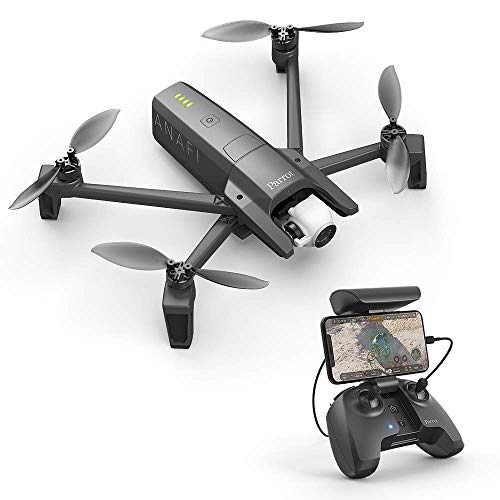
Parrot ANAFI
Best non-Chinese optionFrench-designed, and the practical answer for buyers whose procurement rules exclude Chinese manufacturers. Older and less capable than current DJI hardware, which is the price of that constraint.
Check price on AmazonAffiliate link. Price and stock change constantly, so we show them only on Amazon.
- French manufacturer
- Folding airframe
- 180-degree tilt gimbal
- Passes procurement rules that exclude Chinese drones
- Unusual straight-up gimbal tilt
- Camera and transmission lag current DJI models
- Thin accessory ecosystem
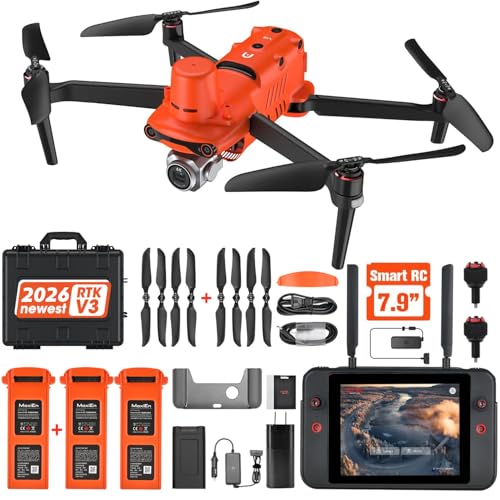
Autel EVO II Pro
Best DJI alternativeThe closest thing to a like-for-like DJI competitor, with an RTK variant for survey work. Buyers reach for Autel mainly when a DJI purchase is off the table on procurement grounds.
Check price on AmazonAffiliate link. Price and stock change constantly, so we show them only on Amazon.
- 1-inch sensor
- RTK variant for centimetre positioning
- No DJI account required
- Genuine alternative when DJI is disallowed
- Strong survey and mapping support
- Still a Chinese manufacturer, so most DJI bans catch it too
- Smaller app and accessory ecosystem

Potensic ATOM 2
Best budget alternativeUndercuts the DJI Mini line while keeping the things that matter at this price: GPS hold, a stabilised 4K camera, and sub-250 g weight. The app and transmission are where the money was saved.
Check price on AmazonAffiliate link. Price and stock change constantly, so we show them only on Amazon.
- Under 249 g
- 4K camera with gimbal
- GPS position hold
- Far cheaper than an equivalent DJI Mini
- Still avoids registration
- Transmission range well short of DJI
- Less polished app
Drones and UAS FAQs
Is DJI banned in the US?
The phrase is imprecise. Under the FCC Covered List update, new foreign-produced UAS models generally cannot receive equipment authorization. The FCC FAQ says the addition does not itself prohibit import, sale, or use of device models that were previously authorized. Check the current FCC text and any separate state, local, or contract rule before relying on that distinction.
Can I keep using a DJI drone I already own?
The FCC FAQ frames continued use of a lawfully purchased, previously authorized device differently from authorization of a new covered model. It does not promise that every buyer, employer, public agency, insurer, or site operator will permit a particular use. Confirm the model’s status and the rules that apply to your operation before flying.
What is the FCC Covered List?
The Covered List is the FCC inventory of communications equipment and services determined to pose unacceptable national-security risk. For covered UAS, the consequence discussed in the FCC FAQ is an equipment-authorization barrier for new covered devices. It is not a shorthand for every procurement restriction, import rule, or operating rule that a buyer may encounter.
Does a Blue UAS listing make a drone automatically compliant?
No. A Blue UAS listing is an important named evidence source for a specific program and product, but it is not a universal compliance certificate. Check the current list, the FCC FAQ, the configuration being bought, and the procurement language. A stale vendor claim can fail because the cited program, model, or exemption no longer matches the purchase.