Ukraine Interceptor Drones and What Each One Costs
Ukraine counters Shahed drones with interceptor drones such as Wild Hornets' Sting, SkyFall's P1-SUN, the Octopus and F-Drones' LITAVR. The Associated Press (AP) prices Ukrainian interceptor drones at roughly $1,000 to $2,000 each, against about $30,000 for a Shahed.
Reported top speeds run from 280 km/h for the Sting (Reuters) to 370 km/h for SkyFall's P1-SUN JetKiller (SkyFall).
Ukraine's Interceptor Drones Compared on Speed and Cost
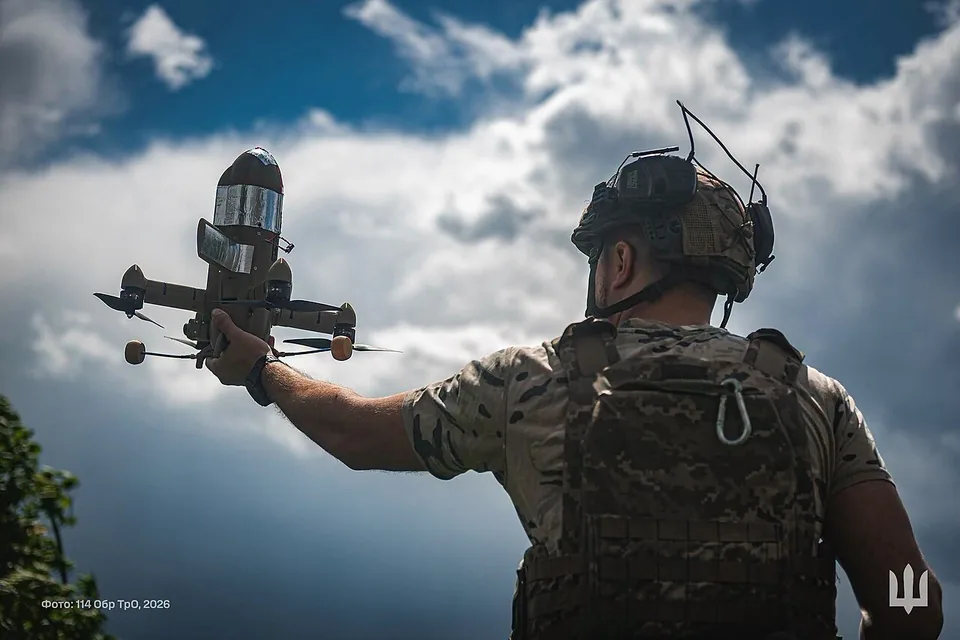
Ukraine interceptor drones are low-cost drones that Ukrainian units use to destroy Shahed-type one-way attack drones. The table lists the systems named in 2025 to 2026 reporting, and every figure carries the outlet or official that published it. Ukrainian defence intelligence says these interceptors are ineffective against Russia's turbojet S8000 Banderol cruise missile, which is a different problem from the Shahed.
Published prices include SkyFall's P1-SUN, about $1,000 according to a SkyFall spokesperson quoted by AP, and Wild Hornets' Sting, about $2,000 according to the Kyiv Post. The state-owned Octopus design and F-Drones' LITAVR have no published unit price.
Merops, built by the U.S. initiative Project Eagle and tested heavily in Ukraine, costs about $15,000 per unit according to a Kyiv Post report. Sources publish different top speeds for the Sting, starting at over 160 km/h in 2024 Kyiv Post reporting. The table gives the Sting the 280 km/h that Reuters reported in a March 2026 Al-Monitor dispatch.
| System | Maker | Reported speed | Reported unit cost | Status | Source |
|---|---|---|---|---|---|
| Sting | Wild Hornets | Up to 280 km/h (Reuters) | About $2,000 or less (Reuters); $2,500 (Wild Hornets via Business Insider, Aug 2025) | Regular service since June 2025 (Reuters) | Reuters via Al-Monitor; Kyiv Post |
| P1-SUN | SkyFall | Up to 310 kph (Reuters, Jul 2026) | About $1,000 (SkyFall via AP) | Introduced November 2025 (Reuters) | AP via Fortune; Reuters via Internazionale |
| P1-SUN JetKiller | SkyFall | 370 kph (SkyFall via Reuters) | not published | Mass production planned for August 2026 (Reuters) | Reuters via Internazionale |
| Octopus | Developed within the Armed Forces of Ukraine; 29 licensed companies plus the UK Government (MoD) | not published | not published | 8,000 ordered, April 2026 (MoD) | Ukraine Ministry of Defence |
| LITAVR | F-Drones | 350 km/h maximum (MoD) | not published | Serial production and deliveries since fall 2025 (MoD) | Ukraine Ministry of Defence |
| Bullet | General Cherry (General Chereshnya) | About 309 km/h (Euromaidan Press citing Defense Express) | About $2,000 or less (General Cherry via Reuters) | Serial production since October 2025 (Euromaidan Press) | Euromaidan Press; Reuters via Internazionale |
| Merops | Project Eagle (U.S. initiative), tested in Ukraine | Above 280 km/h (Kyiv Post) | About $15,000 (Kyiv Post) | First U.S. combat interception over Kuwait (Kyiv Post) | Kyiv Post |
| Griffen | Firebolt Engineering (British-Ukrainian) | Up to 350 kph (Reuters) | not published | First Shahed intercepted May 2026 (Reuters) | Reuters via Internazionale |
| Alexa Spatium | not published | not published | not published | Accepted into service with Ukraine's Defense Forces (Militarnyi) | Militarnyi |
How Ukraine Interceptor Drones Work
Ukrainian interceptor drones are flown by a pilot or, on some models, guided by an automatic terminal-guidance system. The Kyiv Post described the Sting in 2024 as a standard quadcopter frame with an elongated dome-shaped warhead in the centre and a guidance camera on top. A ground operator wearing virtual-reality (VR) goggles flies the Sting.
Wild Hornets told The War Zone in March 2026 that Sting interceptors are manually operated by pilots and fit inside a backpack. A November 2025 dev.ua report says the Sting launches without a catapult from any flat surface, and a "Night Hornets" training centre has opened with an operator course of up to three days.
Ukraine's Ministry of Defence (MoD) says the Octopus uses automatic terminal guidance and works day and night, at low altitude and under electronic warfare. For the LITAVR, the MoD lists day and thermal cameras, navigation that does not rely on the Global Positioning System (GPS) and automatic terminal guidance.
SkyFall's P1-SUN Long adds an artificial intelligence (AI) module that SkyFall says detects targets at up to 1 km.
Defence Minister Denys Shmyhal said in December 2025 that interceptors save air-defence missiles for cruise and ballistic missiles, according to ArmyInform. He also called the purchase of anti-Shahed drones a priority for 2026.
What Ukraine Interceptor Drones Cost Against a Shahed
Published estimates price Ukrainian interceptor drones below the Shahed they destroy. AP puts interceptor drones at roughly $1,000 to $2,000, a Shahed at roughly $30,000 and a Patriot interceptor at millions of dollars. On AP's numbers, one Shahed costs 15 times a $2,000 interceptor ($30,000 divided by $2,000) and 30 times a $1,000 one.
Shahed estimates vary by source. Defense News cites a Center for Strategic and International Studies (CSIS) figure of $35,000, the Kyiv Post gives $20,000 to $50,000, and Hanna Hvozdiar, adviser to the defence minister, says up to $50,000. UK Defence Secretary John Healey said the Ukrainian-designed interceptor the UK will build costs less than 10% of the Russian systems it destroys.
Missile prices vary by source as well. The Kyiv Post puts the most expensive interceptor missiles used in the Gulf at $4 to $8 million, while Hvozdiar gave $20,000 to $30,000 for an air-defence interceptor missile without naming the type. The cost-per-intercept comparison sets drone and missile prices side by side.
The $3,000 figure in the headline of a Euromaidan Press article on the P1-Sun is Hvozdiar's average of "up to $3,000" for Ukrainian interceptors generally. SkyFall itself prices the P1-SUN at about $1,000. Jet-powered interceptors cost under $10,000 for Ukraine, according to Grenadyr's Tomasz Wozniak. Sting 2.0 is expected to cost about 30% more than the standard Sting, according to Unmanned Airspace.
Government Procurement and Production Targets
Ukraine's government set a daily production goal in July 2025 and reported deliveries close to it by December. President Zelensky told drone makers on 25 July 2025, "Our request is 1,000 interceptors per day," after Russia launched 741 aerial weapons in one day on 9 July, according to the Kyiv Independent.
In December 2025 Shmyhal said the MoD's Defense Procurement Agency was delivering "nearly 950 interceptor drones per day", and the MoD held contracts with more than ten interceptor makers.
Brigades can order tactical interceptors on the DOT-Chain Defence marketplace, per ArmyInform. In January 2026 Zelensky said Ukraine makes about 1,000 interceptor drones a day but lacks pilots to fly them, according to Gwara Media. Ihor Fedirko of the Ukrainian Council of Gunsmiths said in March 2026 that domestic production runs two to three times above the Defense Forces' needs.
The MoD announced an order for 8,000 Octopus interceptors on 30 April 2026. Twenty-nine licensed Ukrainian companies and the UK Government have joined Octopus production. Four makers hold state supply contracts, and the state keeps the intellectual property. Minister Mykhailo Fedorov set goals of 100% detection and at least 95% neutralisation of enemy aerial targets.
Published shares of Shaheds downed by interceptors run from about one in three to 70%, and each figure covers a different place, period or denominator. The Air Force put the share at about one in three in March 2026 (via the Kyiv Post), and Commander-in-Chief Oleksandr Syrskyi said interceptors downed 70% of Shaheds over Kyiv in February 2026.
Serhii Beskrestnov, adviser to the defence minister, credited interceptors with more than 40% of Shaheds destroyed on 24 May 2026, per Militarnyi.
Jet-Powered Shaheds and Faster Interceptors
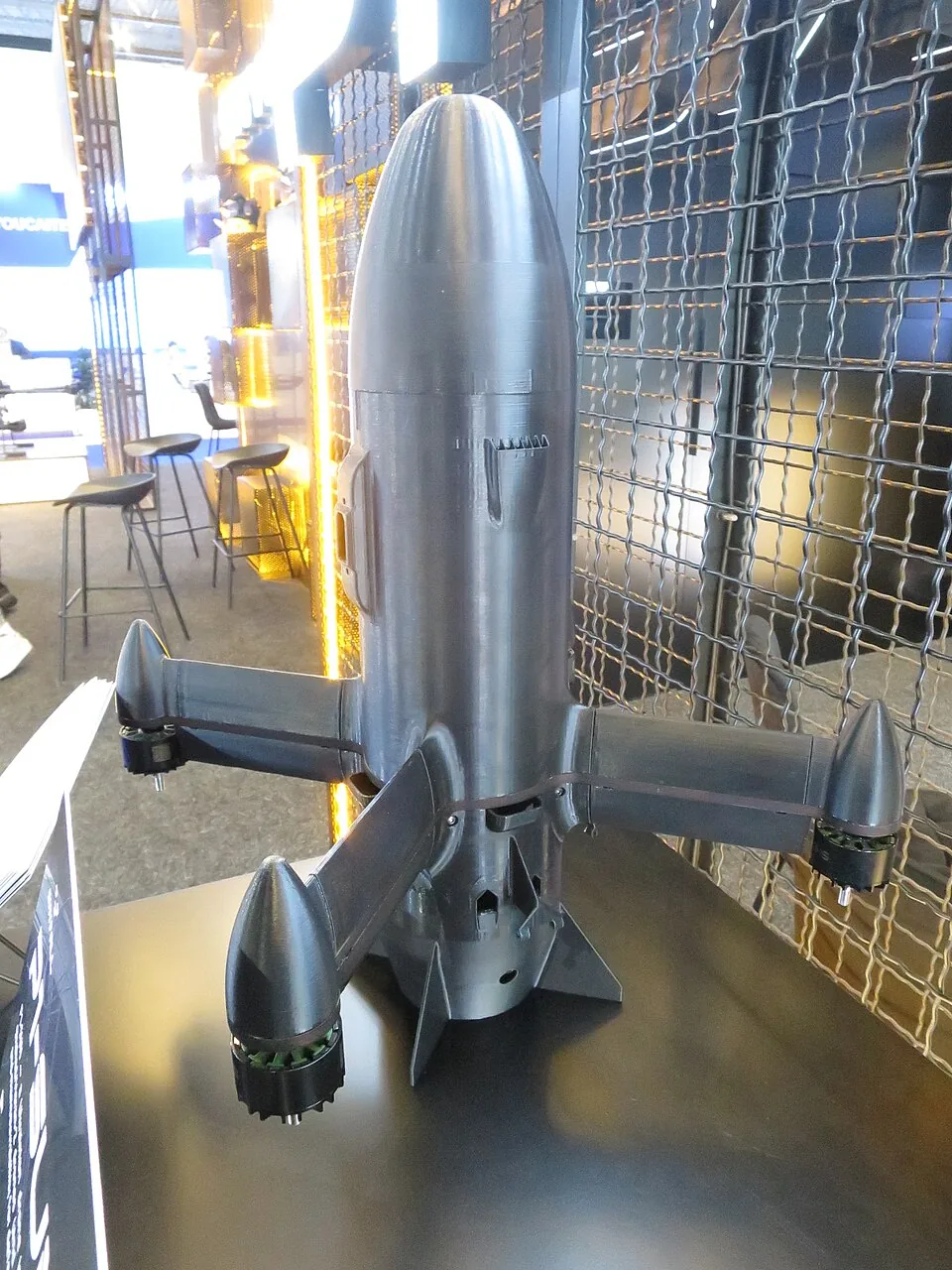
Russia's move to jet-powered Shaheds has pushed Ukrainian makers toward faster interceptors. Senior Air Force commander Yuriy Cherevashenko told Reuters that about 15 to 20% of Russian Shaheds are jet-powered and can reach up to 500 kph. Militarnyi reports 1,400 jet-powered drones launched by early June 2026, against 180 recorded in all of 2025.
SkyFall's P1-SUN JetKiller reaches 370 kph against up to 310 kph for the original P1-SUN, with mass production planned for August 2026, according to Reuters. SkyFall told Militarnyi that a JetKiller flown by the National Guard's Lasar's Group destroyed a Geran-5 jet drone in September 2026. The Geran-3 (Shahed-238) profile covers Russia's jet-powered Geran line.
General Cherry is developing a faster Bullet aimed at more than 400 kph, with a 500 kph goal and mass production planned for September 2026, per Reuters. General Cherry says the price will stay close to the current Bullet's, about $2,000 or less. British-Ukrainian Firebolt Engineering's jet-powered Griffen reaches up to 350 kph and downed its first Shahed, a non-jet model, in May 2026.
Defence Minister Yevhen Khmara said in August 2026, "There are already four potential interceptors that can shoot down jet-powered Shaheds," and Militarnyi says the jet-powered Alexa Spatium has entered service. Wild Hornets' STING S has destroyed about 10 Geran-4 drones and several Geran-5s in combat trials, according to a Kyiv Post report. Wild Hornets will withhold STING S specifications until mass production starts.
A separate constraint on these faster interceptors is the 160 kph Starshield link cap reported in October 2026, covered on the Starshield speed cap page.
Foreign Interest and the Export Ban
The UK agreed in September 2025 to scale up a Ukrainian-designed interceptor under Project Octopus, with Ukraine sharing the intellectual property, according to Defense News. Healey said the UK would supply "thousands of interceptor drones back into Ukraine each month" and gave no unit cost.
The U.S., the United Arab Emirates (UAE), Bahrain, Saudi Arabia and Qatar have repeatedly asked for Ukrainian interceptors, three Ukrainian producers told AP. Kyiv banned weapons exports in 2022, and officials have only recently begun discussing a state-regulated export market. Zelensky proposed swapping Patriot missiles for a matching number of interceptors.
Zelensky said in April 2026 that Ukraine signed 10-year "Drone Deal" agreements with Saudi Arabia, the UAE and Qatar and had requests from 11 countries, per Euromaidan Press. Euromaidan Press notes the statements are not independently verified. Wild Hornets called a reported Saudi Aramco deal "inaccurate", per the Kyiv Post.
Japan's Defense Minister Shinjiro Koizumi said on 9 October 2026 that his ministry signed a contract with SkyFall, with no quantity, model or value given, according to the Kyiv Post.
The U.S. military made its first combat interception with Merops by downing a Shahed-type drone over Kuwait, per the Kyiv Post. Army Secretary Dan Driscoll said Washington ordered thousands, and Poland and Romania have procured Merops. No source in this reporting confirms delivery of a Ukrainian-built interceptor to a Gulf state.
What Is Not Published
Several basic figures are missing from every source used here. The MoD gives no unit price, speed or range for the Octopus and names none of its 29 licensed makers, though Euromaidan Press credits TAF Industries for an Octopus-100 photo. The MoD also gives no LITAVR price, and SkyFall publishes no price for the JetKiller or the P1-SUN Long.
No kill total for any system has been independently verified, and the claims change with each report. P1-SUN claims run from more than 3,000 Shahed-type drones in 2026 (Hvozdiar) to more than 5,500 since November 2025 (SkyFall via Reuters). General Cherry claimed "several hundred" Bullet kills in March 2026, then told Reuters in July 2026 that the Bullet had destroyed more than 1,000 Shaheds since November 2025.
Total MoD spending on interceptors for 2025 and 2026 is not published. Sources quote Shmyhal as defence minister in December 2025, Fedorov in April 2026 and Khmara in August 2026, and none explains the changes. Before citing any figure on Ukraine interceptor drones, read the claim histories in the Sting profile and the P1-SUN profile.
Drones and UAS FAQs
How much do Ukraine interceptor drones cost?
Ukraine interceptor drones cost roughly $1,000 to $2,000 each, according to AP's March 2026 reporting. SkyFall prices its P1-SUN at about $1,000, and Wild Hornets' Sting is reported at about $2,000 to $2,500. Hanna Hvozdiar, adviser to the defence minister, gave an average of up to $3,000, and Grenadyr's Tomasz Wozniak put jet-powered interceptors under $10,000. Octopus and LITAVR prices are not published.
How fast are Ukraine interceptor drones?
Reported top speeds for current models run from about 280 km/h to 370 km/h. Reuters gives up to 280 km/h for the Sting and up to 310 kph for the standard P1-SUN, and the MoD gives 350 km/h for the LITAVR. SkyFall's P1-SUN JetKiller reaches 370 kph, and General Cherry is developing a Bullet aimed at more than 400 kph. No published source gives an independent speed test for any of them.
Who makes Ukraine's interceptor drones?
Several Ukrainian makers build Ukraine's interceptor drones, alongside one design developed within the Armed Forces of Ukraine. Wild Hornets makes the Sting, SkyFall the P1-SUN, F-Drones the LITAVR and General Cherry the Bullet. The Octopus was developed within the Armed Forces of Ukraine and is built by 29 licensed Ukrainian companies plus the UK Government, with the state keeping the intellectual property.
How do Ukraine's interceptor drones work?
Ukraine's interceptor drones are flown by a pilot or, on some models, guided by an automatic terminal-guidance system. Wild Hornets says pilots fly the Sting manually, while the MoD says the Octopus and LITAVR use automatic terminal guidance. Shmyhal said the drones let Ukraine save air-defence missiles for cruise and ballistic missiles.
Primary sources
- Fortune / Associated Press: U.S. and Gulf states request Ukraine's interceptor drones
- Ministry of Defence of Ukraine: Ministry of Defence procures 8,000 Octopus interceptors
- Ministry of Defence of Ukraine: F-Drones' LITAVR counter-drone
- ArmyInform: Ministry of Defense increases supply of interceptor drones to almost 950 per day
- Reuters (via Internazionale): Companies turn to faster interceptor drones as Russia deploys jet-powered Shaheds
- Al-Monitor (Reuters): Inside the Ukrainian interceptor drones wanted around the Gulf
- Kyiv Post: Ukraine drone manufacturer denies talks with Saudi Aramco
- Kyiv Post: US downs Shahed with Ukraine-tested Merops drone