FP-1 Drone vs Shahed Compared on Reported Specs and Cost
In the FP-1 drone vs Shahed comparison, the published figures give Ukraine's FP-1 a heavier reported warhead, while Russia's Shahed-136/Geran-2 is launched in larger numbers.
Fire Point told Defense News its rebuilt FP-1 flies 1,677 miles, and Ukraine's military intelligence directorate (HUR) told Militarnyi that Russia produces about 2,800 Geran-2 strike drones a month.
FP-1 vs Shahed Side by Side
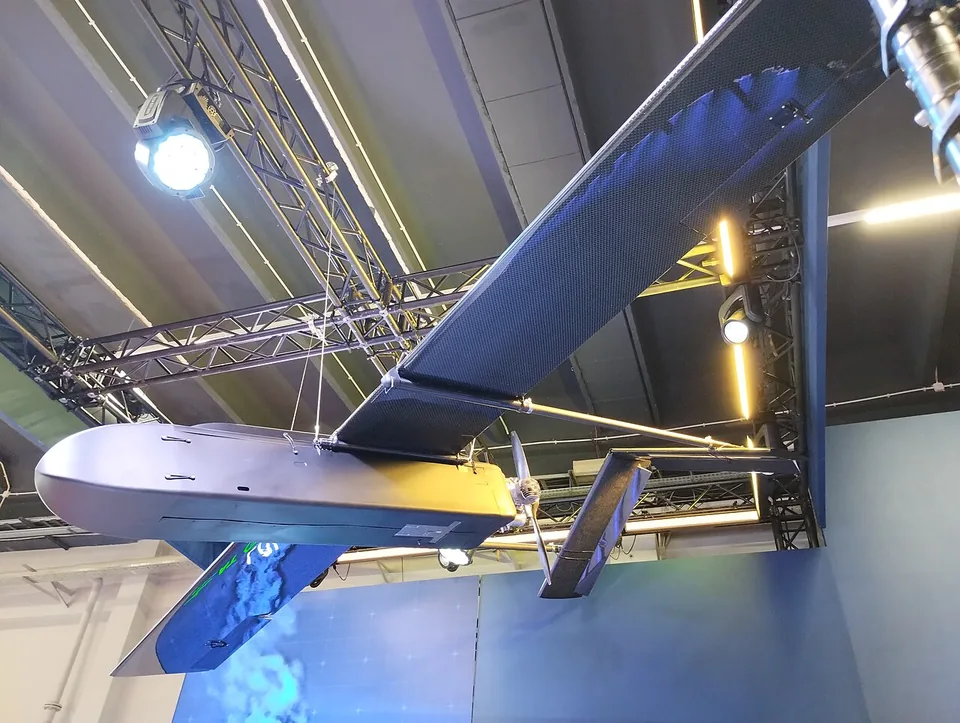
The FP-1 and the Shahed-136/Geran-2 are both long-range one-way attack drones. Fire Point's FP-1 carries a 105 kg warhead at a range of 1,000 km, according to ArmyInform. An Islamic Revolutionary Guard Corps (IRGC) exhibition poster reported by Janes gave the Iranian Shahed-136 a 50 kg warhead and a 2,500 km range.
Read together, the numbers suggest the FP-1 carries more explosive per drone and the Shahed family is launched in far larger numbers. The Institute for Science and International Security (ISIS) counts 54,538 Shahed-type launches in 2025, decoys included. Fire Point planned about 9,000 drones for that year, according to its chief technology officer Iryna Terekh.
No official Geran-2 specification appears in the sources, so each cell below names the maker, official or analyst behind the figure.
No winner follows from the table. The FP-1 leads on the reported warhead weight of its 2026 version, the Shahed family leads on launch volume, and speed, engine and size figures exist for the Shahed-136 only.
| Parameter | FP-1 | Shahed-136 / Geran-2 |
|---|---|---|
| Maker and origin | Fire Point, Ukraine (AP) | Iranian design; Iran Aircraft Manufacturing Industrial Company (HESA) involved in Shahed-136 production (US Treasury); built in Russia as Geran-2, mainly at Alabuga (HUR via Militarnyi) |
| Range | 1,600 km (AP, The War Zone, Aug 2025); 1,000 km (ArmyInform, Mar 2026); 1,677 miles for rebuilt version (Fire Point via Defense News, Jun 2026) | 2,500 km (IRGC poster via Janes); 2,000 km (CSIS); 1,500 miles (Defense One) |
| Warhead | 60 kg (AP, The War Zone, 2025); 105 kg (ArmyInform, 2026) | 50 kg (IRGC poster via Janes); 40 kg (CSIS, Defense One) |
| Speed | not published | 185 km/h (IRGC poster via Janes); just over 100 mph (Defense One) |
| Engine | not published | Four-cylinder MD550 (IRGC poster via Janes) |
| Weight and size | not published | 200 kg; 2.5 m wingspan, 3.5 m length (IRGC posters via Janes) |
| Airframe | Carbon fiber, shared with FP-2 (UNITED24) | not published |
| Unit cost | About $55,000 (Fire Point via AP, The War Zone) | $35,000 working figure; outside estimates $20,000 to $80,000 (CSIS) |
| Output | About 200 a day claimed (Shtilerman via ArmyInform, Mar 2026) | About 2,800 Geran-2 a month (HUR via Militarnyi, Aug 2026) |
| Launch | No airfield needed (AP) | Booster rocket that drops off after launch (Janes) |
Unit Cost Estimates for Each Drone
Fire Point puts the FP-1's unit cost at about $55,000, the figure AP and The War Zone both reported in August 2025. Terekh gave the same rough price to the Kyiv Independent, and a Euromaidan Press page labelled advertorial prices the drone at 'as little as $50,000'. No official Defense Ministry unit price for 2025 or 2026 appears in that reporting.
Shahed-136 cost estimates spread far wider, from a few thousand dollars to about $80,000. CSIS, the Center for Strategic and International Studies, lists $20,000 to $30,000 from an Israeli missile expert, about $80,000 from a British analyst who inspected a captured Shahed-136, and $50,000 from Forbes Ukraine.
CSIS uses a 'conservatively high' $35,000 for its own calculations, so an FP-1 at about $55,000 costs roughly 1.6 times that working figure.
Le Grand Continent cites an unnamed Tehran academic for a production cost of about $4,000 (roughly €3,500) and reaches about $7,000 from the author's own tractor-industry comparison. The article does not reconcile the two, says most estimates fall between $20,000 and $50,000, and leaves verification of the $4,000 figure outside its scope.
Leaked documents reported by Defense One show Iran asking $375,000 per Shahed-136 assembled in Russia, negotiated down to $193,000 apiece for 6,000 drones. Ukrainska Pravda, citing the same leak, adds a price of about $290,000 each for an order of 2,000. These are licensing and component fees from documents Defense One could not authenticate.
They describe a possible payment from Russia to Iran and say nothing reliable about what a drone costs to build.
Production and Launch Volume
Fire Point's own output figures vary by date, and none has been independently verified. AP reported roughly 100 FP-1s a day in August 2025. Terekh later told the Kyiv Independent that 100 a day was maximum capacity and did not describe a typical day. Terekh also said about 9,000 drones were planned for 2025.
In March 2026, co-owner and chief designer Denys Shtilerman told ArmyInform that Fire Point 'calmly' produces about 200 aircraft a day across more than 50 sites and could double or triple that capacity.
Shtilerman's 200 a day works out to about 6,000 a month over 30 days, while Terekh's 9,000 for 2025 works out to 750 a month. The two figures come from different dates and sit eight times apart.
HUR told Militarnyi in August 2026 that Russia builds about 2,800 Geran-2 strike drones a month. Militarnyi gives that as more than 33,600 a year, mostly at the Alabuga Special Economic Zone in Tatarstan. A February 2026 ISIS report estimates from open-source intelligence (OSINT) that Alabuga likely produces 80 to 120 strike drones a day, depending on component availability.
In September 2025, HUR representative Andrii Yusov told Novosti.LIVE that Russia could produce up to 2,700 Shaheds a month, as reported by LIGA.net.
The ISIS monthly analysis counts 36,456 Shahed-type launches, decoys included, from January to June 2026, with a record 8,161 in May. ISIS calls June a 'clear break' from the January to May growth pattern. It puts Shahed/Geran strike drones at 62% to 66% of 2026 launches, with some months estimated.
Range and Warhead Figures Compared
Published FP-1 range figures run from 1,000 km to 3,000 km, and the sources tie them to different versions and dates. AP and The War Zone gave 1,600 km with a 60 kg warhead in August 2025, and ArmyInform gave 1,000 km with a 105 kg warhead in March 2026.
In June 2026, Fire Point told Defense News that its rebuilt FP-1 flies 1,677 miles, up from 1,025 miles.
Euromaidan Press says a second generation in spring 2026 moved fuel into the wings, which allowed the 105 kg warhead and added terrain-matching navigation. President Zelensky said in June 2026 that upgraded FP drones 'can now reach targets at distances of 3,000 kilometers'. The Euromaidan author speculates, without confirmation, that the 3,000 km version may carry a smaller warhead.
Shahed-136 figures disagree as well. The IRGC poster reported by Janes gives 2,500 km and a 50 kg warhead, CSIS gives 2,000 km and 40 kg, and Defense One gives a reported 1,500 miles and 40 kg. Janes notes that the 2,500 km figure matches the range Houthi rebels claimed for their Waeid drone in March 2021.
On warhead, the FP-1's 2026 figure of 105 kg is 2.1 times the poster's 50 kg for the Shahed-136 and about 2.6 times the 40 kg that CSIS and Defense One report. On range, the answer depends on the version and source. The 2025 FP-1 figure of 1,600 km sits below the poster's 2,500 km for the Shahed-136.
Fire Point's 1,677 miles for the rebuilt FP-1 equals about 2,700 km, above that poster figure. No official Geran-2 specification appears in the sources, so every Shahed range figure here describes the Iranian original or an analyst estimate.
Why the Shahed Became the Benchmark
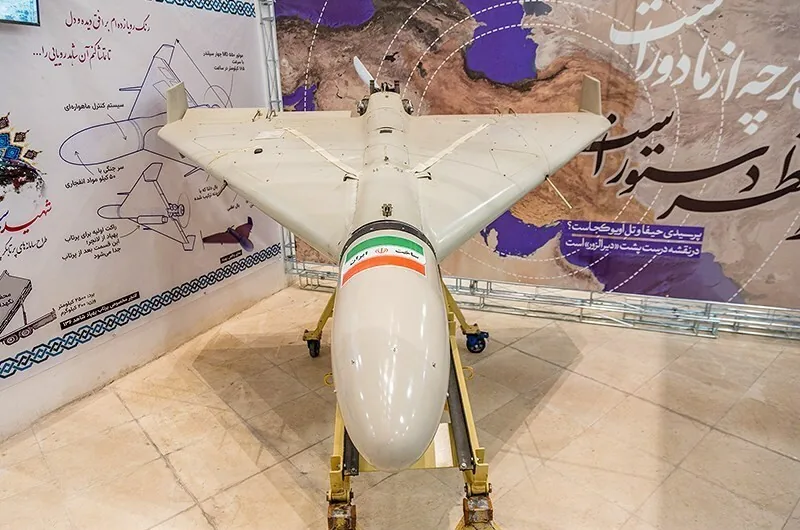
Published estimates give the Shahed a low unit cost and very large launch numbers alongside a low hit rate. CSIS counted over 14,700 one-way attack drones launched from 28 September 2022 to 28 December 2024, and said Russia launched more in September to December 2024 than in the previous 23 months combined.
CSIS also says Shaheds hit their targets 'less than 10 percent of the time' and calculates roughly $350,000 per target struck.
Launches climbed into mid-2025. Ukrainian Air Force data reported by the Kyiv Independent counted a record 5,337 Shahed-type drones in June 2025. A HUR source told the Kyiv Independent that Geran production had reached up to 70 a day, from a reported 21 a day a year earlier.
OSINT analyst Kyle Glen counted 6,297 Shahed-type drones and Gerbera-type decoys in July 2025, a 1,378% rise on the 426 of July 2024, as reported by Euromaidan Press.
Decoys swell those counts. A Ukrainian mobile defense group told the Kyiv Independent that Gerbera decoys typically make up about half the drones in an attack. ISIS says official sources began publishing the strike-drone share on 8 September 2025.
Militarnyi reports that the Russian Geran-2 has gained protected navigation, cameras, data modems and online control, plus versions armed with R-60 missiles or Verba man-portable air-defense systems (MANPADS) from late 2025. In 2026, Militarnyi says, it added gimbaled electro-optics and very-high-frequency omnidirectional range and distance measuring equipment (VOR/DME) navigation.
The same outlet says components made in 2025 in Germany, Japan, Switzerland and the United States were found in Geran-2s downed in 2026.
Defending Against Each Drone
Systematic interception counts are published for the Shahed family, while the FP-1 interception claims in these sources come from Russian local officials describing single raids. ISIS counts 47,275 interceptions and 7,263 hits among the 54,538 Shahed-type launches of 2025.
In ISIS's count, the hit rate on total launches was 2% to 3% in January and February 2025 and rose to 9% in March. From April 2025 the hit rate ran from 11.5% to 18.7%.
For January to June 2026, ISIS reports 33,113 of 36,456 launches shot down or suppressed, and hits fell from 14.61% of launches in January to 6.65% in May, then rose to 8.07% in June.
On the FP-1, Omsk governor Vitaly Khotsenko said air defenses destroyed most of the drones in the July 2026 refinery strike. In October he acknowledged that one drone reached the city's northern industrial hub. Terekh claims a 55% to 60% hit rate on Russian targets, and the Kyiv Independent notes that the Ukrainian government does not publish effectiveness data.
Hit-rate figures for the two drones measure different things: CSIS counts hits on targets, ISIS counts hits against all launches including decoys, and Terekh's figure is Fire Point's own claim. The spending side of shooting down drones priced in the tens of thousands of dollars is covered on the cost-per-intercept page.
Where Each Drone Is Used
Fire Point and the Ukrainian military both credit the FP-1 with more than half of Ukraine's long-range strikes inside Russia.
Terekh told AP the FP-1 accounts for 60% of strikes deep inside Russian territory, and Shtilerman cited General Staff data for over 55%. UNITED24 Media, citing Ukrainian military reporting, gives about 59% of long-range strike missions and 54% of confirmed hits. UNITED24 links FP-1 strikes to refineries in Saratov, Novokuibyshevsk and Volgograd.
Ukraine's General Staff said drones struck the Omsk refinery on 6 July 2026, about 2,700 km from Ukrainian-held territory, according to Reuters, and Fire Point said its upgraded FP-1s carried out the attack. Fire Point said upgraded FP-1s hit the Omsk Oil Refinery again on 8 October 2026, more than 2,500 km from the border, as UNITED24 Media reported.
The 20 June 2026 strike on a refinery in Russia's Tyumen region is disputed. Defense News says an FP-2 carried it out, while Zelensky's remarks about 3,000 km 'upgraded FP drones' point to the FP-1.
The Shahed-136 started as an Iranian weapon. The U.S. Department of the Treasury says Iran used the Shahed-136 to attack oil tankers and exported it to Russia. Under Secretary Brian E. Nelson said Iran 'is directly implicated in the Ukrainian civilian casualties' from Russia's use of Iranian drones.
Zelensky said on 24 June 2025 that around 28,000 Shahed-type drones had been launched at Ukraine since 2022, and Militarnyi gives an unsourced total of more than 120,000 since the full-scale invasion.
The wider drone record on both sides of the conflict is collected on the Ukraine-Russia war drones page.
Who Builds Each Drone
Fire Point had no defense background before the 2022 invasion. AP says its founders, who spoke anonymously, came from construction, game design and architecture, and Defense News says Fire Point was a film and television casting agency before the invasion.
UNITED24 says the first FP-1 prototype flew in January 2023 and was certified in May 2023, and Terekh told the Kyiv Independent that staff grew from 18 in 2023 to about 2,200.
Per documents and sources cited by the Kyiv Independent, Fire Point sold FP-1s worth 13.2 billion hryvnias (about $320 million) to the government in 2024. The sum was just under a third of the Defense Ministry's drone spending that year.
Shtilerman told a parliamentary commission that Fire Point, which is registered in Ukraine, is worth over $2.5 billion, according to LIGA.net, and none of the sources mentions a stock listing.
The Kyiv Independent reported in August 2025 that Ukraine's National Anti-Corruption Bureau (NABU) was investigating whether Fire Point inflated component values, delivery numbers or both. Fire Point denied the accusations, and no charges have been brought.
The Defense Ministry's anti-corruption watchdog later said all available data 'strongly suggests' that Timur Mindich is a beneficial owner or the sole ultimate beneficiary, according to a Kyiv Independent explainer. Fire Point denies any connection to Mindich and has called the probe rumor-based.
On the Shahed side, the U.S. Treasury says HESA has been involved in producing the Shahed-136, and HUR says main Geran-2 production sits at Alabuga. Leaked documents described by Ukrainska Pravda say Alabuga Machinery transferred 2 million grams of gold in February 2023 to Sahara Thunder, which Defense One calls an IRGC front company.
What the FP-1 Drone vs Shahed Figures Cannot Settle
Several basic FP-1 specifications are missing from the published reporting: wingspan, length, cruise or top speed, and the engine model. UNITED24's statement that the FP-1 shares a carbon fiber airframe with the FP-2 is the only airframe detail on the record. For the Shahed, the speed, size and engine figures come from IRGC posters for the Iranian Shahed-136, and no official Geran-2 specification appears in the sources.
Effectiveness cannot be compared directly. Terekh's 55% to 60% is a maker's claim about Russian targets, CSIS's under-10% covers Shahed hits on targets from 2022 to 2024, and ISIS measures hits against all launches, decoys included.
Three disclosures would change this comparison: an official Defense Ministry unit price or contract total for the FP-1, independent verification of Fire Point's production and hit-rate figures, and an official Geran-2 specification. Until one arrives, the FP-1 leads on the latest reported warhead weight and the Shahed family leads on lower estimated cost and launch volume. Each lead rests on a maker's, an official's or an analyst's numbers.
To take the FP-1 drone vs Shahed comparison further, read the Liutyi vs FP-1 comparison and the Ukrainian long-range drones overview. Match each range and warhead figure to the year its source published it.
Drones and UAS FAQs
How much does an FP-1 drone cost?
Fire Point says an FP-1 costs about $55,000, a figure reported by AP and The War Zone and repeated by Terekh to the Kyiv Independent. A Euromaidan Press page labelled advertorial puts it at as little as $50,000. No official Defense Ministry unit price appears in the reporting, so every figure comes from Fire Point or the press.
Why is the Shahed drone so good?
The published record points to low estimated cost and very high volume, while its hit rate is low. CSIS works with a $35,000 unit cost against outside estimates of $20,000 to $80,000, and HUR says Russia builds about 2,800 Geran-2 strike drones a month.
CSIS also found Shaheds hit their targets less than 10 percent of the time from 2022 to 2024, at roughly $350,000 per target struck.
What is the best defense against Shahed drones?
No source in this comparison names a single best defense against Shahed drones. ISIS data shows 33,113 of 36,456 Shahed-type launches shot down or suppressed from January to June 2026. Decoys add to the load, since a Ukrainian mobile defense group says Gerbera decoys make up about half the drones in a typical attack.
Does the U.S. have Shahed drones?
None of the sources reviewed says the United States operates the Shahed-136. The U.S. Treasury has targeted Iran's drone procurement network and says Iran exported the Shahed-136 to Russia. Le Grand Continent, comparing costs, cites U.S. Central Command (CENTCOM) for a $35,000 production cost of the U.S. LUCAS drone, and Militarnyi says U.S.-made components from 2025 were found in downed Geran-2s.
Primary sources
- ArmyInform: '200 Drones per Day', Fire Point production scale
- AP via Arab News: Ukrainian startup making drones to strike deep inside Russia
- Defense News: Ukraine's top strike-drone maker moves into ballistic missile defense
- Janes: IRGC confirms specs for Shahed-136 attack UAV
- CSIS: Calculating the Cost-Effectiveness of Russia's Drone Strikes
- Militarnyi: Russia Produces About 2,800 Geran-2 Drones per Month
- Institute for Science and International Security: Monthly Analysis of Russian Shahed 136 Deployment (August 2025 to June 2026)
- Kyiv Independent: Maker of Ukraine's new Flamingo cruise missile facing corruption probe