HOVERAir X1 Pro Review: A Flying Camera, Not a Drone
A buyer guide to the self-flying camera category, why it is judged against a gimbal rather than a drone, and the model naming that trips people up.
Buy the HOVERAir X1 Pro If You Will Never Pilot It
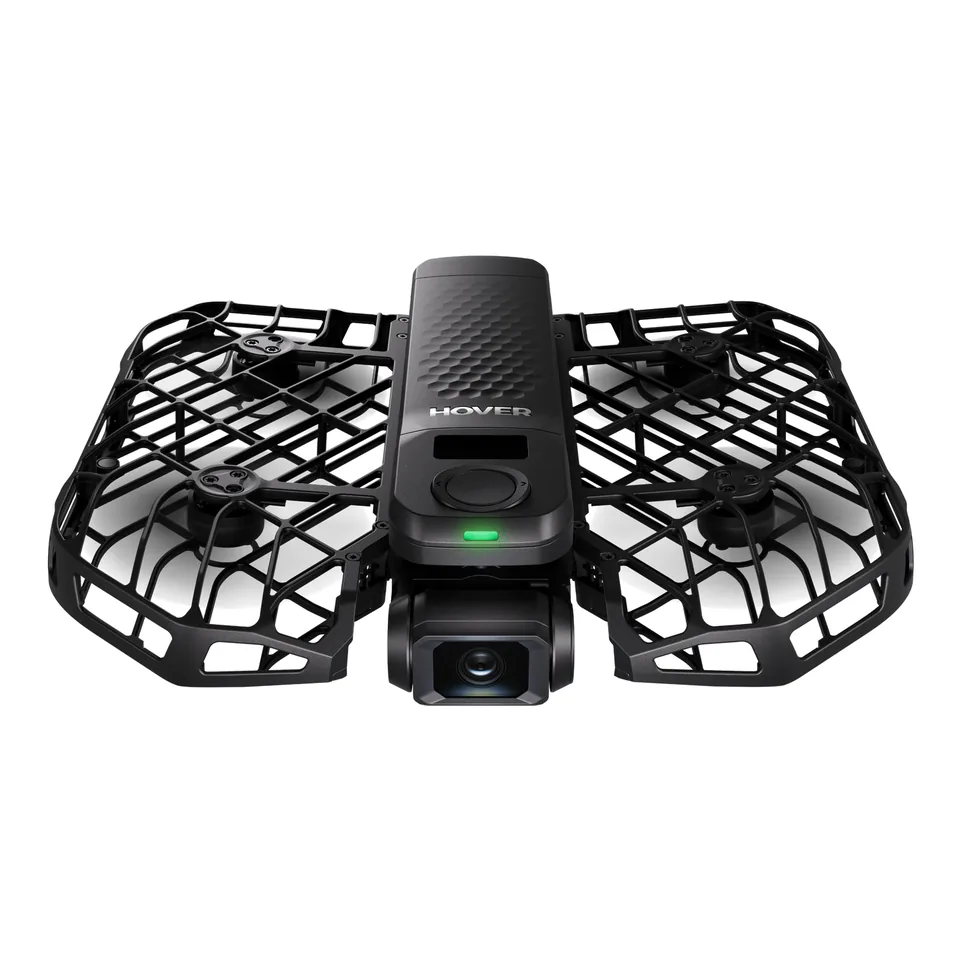
The HOVERAir X1 Pro is the right buy for someone who wants footage of themselves and has no interest in learning to fly, because it launches from a palm and follows preset paths with no controller at all. In the guides we publish here, the buyers who regret it are the ones who wanted a drone and bought a camera.
It weighs 191.5 grams and flies with its propellers fully inside protective grids. That combination is what makes it safe to hand to someone with no flying experience.
The comparison that matters is against a gimbal camera or an action camera, not against a DJI Mini. It is solving a different problem.
Enclosed Propellers Change Who Can Use It
Full propeller enclosure removes the main reason people are nervous around drones. Exposed propellers at speed are the injury risk, and grids that fully surround them mean the aircraft can launch from a hand, fly near people, and be caught out of the air on landing.
That design decision cascades. Palm launch means you do not need clear flat ground, which is what makes the X1 Pro usable on a trail, a beach or a ski slope where a conventional drone needs a staging area.
At 191.5 grams it also sits under the Federal Aviation Administration (FAA) 250 gram registration threshold for recreational flight, so the paperwork friction matches the physical friction.
- Propellers fully enclosed in grids, so the aircraft is safe to launch and catch by hand.
- Under 250 g, so no recreational registration and no Remote ID unless you register it.
- Preset flight paths rather than free piloting, which is the whole design premise.
- Level 5 wind resistance, about 10.7 m/s, which is the first practical limit you will hit.
Be Realistic About Flight Time and Wind
HOVERAir rates the X1 Pro at 16 minutes, and independent reviewers report 11 to 13 minutes in real use. That gap is larger than the usual manufacturer optimism, and it changes how you plan a session rather than just how you feel about the number.
Practically it means several short flights per outing, with spare batteries treated as part of the purchase rather than an accessory. A single battery covers a couple of takes, not an afternoon.
Wind is the harder limit. A 191.5 gram aircraft with enclosed propellers presents a lot of surface area for very little mass, and the grids that make it safe also make it a sail. Level 5 resistance is roughly a fresh breeze, and coastal or ridge conditions will exceed it regularly.
Check Which Model the Listing Is Actually Selling
The X1 Pro records 4K and the X1 ProMax records 8K, and retail listings routinely present the two together under one product page. Buyers who wanted 8K and received 4K almost always bought from a listing that named both.
The two models also differ in camera and range beyond the headline resolution, so the choice is not purely about a number most people will never output at. Confirm the exact model in the title, not in the marketing copy underneath it.
This is the single most common purchasing error in this category, and it is entirely avoidable by reading the product title carefully before checkout.
Our HOVERAir X1 Pro vs ProMax comparison sets the two side by side on ten dimensions, and says plainly which figures HOVERAir does not publish.
| Specification | Stated value | What it means in practice |
|---|---|---|
| Weight | 191.5 g | Under the 250 g line, so no recreational registration |
| Video | 4K on the Pro, 8K on the ProMax | Check the model in the listing title before buying |
| Flight time | 16 min rated | Reviewers report 11 to 13 min, so buy spare batteries |
| Wind resistance | Level 5, about 10.7 m/s | The grids add surface area; wind is the real limit |
| Propellers | Fully enclosed in grids | Safe to palm-launch and to catch on landing |
How It Compares With an Action Camera
The honest competitor to the X1 Pro is a chest-mounted action camera, not a drone. Both solve the same problem of filming yourself while doing something, and they fail in opposite directions.
An action camera never runs out of framing options because it only has one, and it never runs out of battery mid-take in the way a 191.5 gram aircraft does. What it cannot do is show you in the landscape, which is the entire reason people buy a follow camera.
The X1 Pro gives you the third-person shot that makes a trail run look like a trail run rather than a shaky corridor of ground. That shot is genuinely hard to get any other way without a second person.
The failure mode is different too. An action camera fails by being boring. A follow camera fails by being grounded in wind, which is why buyers in exposed places end up disappointed.
What It Costs to Use Properly
Spare batteries are the purchase, not an accessory. With 11 to 13 minutes of real flight time per pack, one battery covers roughly two takes, so a session needs three.
The bundles that include extra batteries and a charging case are close to mandatory for that reason, and buying the single-battery kit is the most common regret in this category.
Storage is the smaller cost. The aircraft records internally, so plan to offload after each outing rather than assuming you can keep shooting.
Where the Preset Paths Work, and Where They Fail
The X1 Pro flies a fixed set of shots rather than being piloted, and knowing which ones work saves a lot of wasted flights. The orbit, the follow and the overhead pull-away are the three that consistently produce usable footage.
They work because they all assume one moving subject in reasonably open space. A runner on a trail, a skier on a slope, a cyclist on a road: the aircraft has a clear subject to lock onto and room to move around it.
They fail in clutter. Tree cover, narrow streets and crowds all give the tracking more to lose the subject against, and the aircraft has no pilot to correct it when it does.
The other failure is a static subject. A person standing still produces a shot that looks like a slow zoom, because the interest in these paths comes from the movement rather than the framing.
Who Should Buy Something Else
- Anyone who wants to choose their own camera position should buy a piloted camera drone such as the DJI Mini 4 Pro, because preset paths cannot frame an arbitrary shot.
- Landscape and property shooters need a real camera drone; a follow-cam is built to keep a person in frame, not a building.
- Anyone flying regularly in coastal or mountain wind will be frustrated by a 191.5 gram airframe whatever the mode.
- Buyers who want 8K should confirm they are buying the ProMax, not the Pro.
- If you want to learn to fly as the point of the purchase, this teaches you nothing, because there is nothing to pilot.
What Would Change Our Answer
A meaningful jump in wind tolerance would change this recommendation most. Wind is the limit that stops people using the aircraft they bought, and an airframe that held position in a stiff breeze would widen its usefulness considerably.
Real manual control would also change it. If HOVERAir added genuine free piloting alongside the preset paths, the aircraft would start competing with camera drones rather than sitting beside them.
A price cut would not change our answer, because the recommendation is about what the aircraft is for rather than what it costs.
If a hands-free follow camera is genuinely what you want, check the current price and confirm the listing says Pro rather than ProMax before you order.
Drones and UAS FAQs
How many batteries do I need?
Three for a real session. With 11 to 13 minutes of usable flight per pack, a single battery covers roughly two takes. The bundles with extra batteries and a charging case are worth the difference for that reason alone.
Is it better than an action camera?
It is different rather than better. An action camera gives you one framing, endless runtime and total wind immunity. The X1 Pro gives you the third-person shot that shows you in the landscape, which is hard to get any other way without a second person.
Does the HOVERAir X1 Pro shoot 8K?
No. The X1 Pro records 4K, and the X1 ProMax is the 8K model. Retail listings frequently present both together on one page, so read the model name in the product title rather than the marketing copy below it.
Do I need to register the X1 Pro?
Not for recreational flight. At 191.5 g it sits under the FAA 250 g registration threshold. Flying it for any business purpose puts you under Part 107, which requires registration regardless of weight.
Is it a replacement for a DJI Mini?
No, and it is not trying to be. A Mini is an aircraft you pilot to a position you choose. The X1 Pro flies preset paths around you with no controller. They solve different problems, and the choice is about which one you actually want.
How long does the battery really last?
HOVERAir rates 16 minutes and independent reviewers report 11 to 13 in real use. Plan for several short flights rather than one long one, and treat spare batteries as part of the purchase rather than an optional extra.
Can it fly in wind?
Within limits. It is rated at level 5, roughly 10.7 m/s, which is about a fresh breeze. The enclosed propeller grids add surface area without adding much mass, so wind affects it more than the rating alone suggests.