DJI alternatives: objective options compared
DJI alternatives are competing drone systems buyers evaluate when DJI access, policy risk, or mission fit is the issue.
DJI alternatives depend on the job
Alternatives to DJI depend on whether the buyer needs a creator camera drone, an enterprise inspection aircraft, or a government-trusted small UAS.
No single brand is the automatic winner across those jobs.
Start from mission and compliance, then compare hardware, not social-media brand loyalty. The information-gain point is that a product alternative and a policy alternative are not necessarily the same thing. Evidence status should be explicit: a company page can show positioning, while the FCC and Blue UAS sources establish the relevant policy screens.
Write the requirement before naming a replacement
A useful DJI-alternative search begins with a short requirement: the mission, operating environment, operator skill, data workflow, source requirement, and support expectation. “Best alternative” has no stable meaning until those conditions are stated. A creator, a utility inspector, and a government team can reach different shortlists from the same category.
Do not begin by assuming an alternative must match every DJI feature. That can hide the actual decision. A buyer may value training continuity, integration, supply certainty, autonomy behavior, or procurement eligibility more than a one-to-one feature comparison. State the primary constraint before searching product pages.
This page deliberately does not publish unsourced prices, ratings, or model-spec shootouts. Those change quickly and can turn a policy page into a stale shopping list. Use the official company links to validate current product details after the policy and workflow screen is complete.
Separate product choice from authorization status
The FCC Covered List question is an authorization question for new foreign-produced UAS models. It is not a consumer-review score. The FCC FAQ distinguishes newly covered models from previously authorized devices, and buyers should read it before treating a brand swap as a policy solution.
That makes Autel Robotics a useful example of a real tradeoff. It can be considered as a product alternative in enterprise workflows, but a switch from DJI to another foreign-produced system does not automatically remove the authorization category question. Evidence status: this follows the FCC’s foreign-production framework, not a claim about any particular model’s availability.
A U.S.-oriented system can change the origin and procurement screen, but it still needs model-specific verification. No company name, country label, or dealer statement is a substitute for the current list, authorization evidence, and the buyer’s own rules.
Compare support, data, and transition costs
Replacing a fleet is not just an airframe decision. Consider operator training, spare parts, batteries, controller and software workflow, data retention, service response, and integrations. A platform that meets one policy requirement may still create transition work that the budget and calendar must absorb.
The tradeoff is concrete: retaining a familiar workflow may reduce retraining and operational change, while choosing a different supply and compliance path may reduce policy risk for future purchases. Neither outcome can be assumed from the brand name. The evidence must cover the exact planned configuration and use case.
For public buyers, keep a record of why a product was screened in or out. That record should cite the requirement and the current supporting source, not a blog summary. It makes later review possible when a list, model, or policy interpretation changes.
Alternatives comparison
| Option | Origin screen | Buyer fit to research | Public-market path |
|---|---|---|---|
| Skydio | U.S. autonomy-focused maker | Public safety and inspection autonomy | Private; profile |
| Autel Robotics | Chinese enterprise maker | Enterprise and thermal workflows | Private; still Covered List-exposed for new foreign UAS models |
| Parrot | Non-Chinese European maker | ANAFI-class enterprise systems | Separate listing analysis |
| Red Cat Teal | U.S. defense sUAS | Defense and trusted small UAS | Public; profile |
| AeroVironment | U.S. defense UAS | Tactical and loitering systems | Public; profile |
Why Autel is not a clean Covered List workaround
Autel is often named as a DJI alternative, but it is still a foreign-produced UAS brand for Covered List screening.
FCC FAQs focus on foreign production, not on swapping one Chinese brand for another as a free pass.
Treat Autel as a product alternative with the same authorization category questions as other foreign makers. The attribution failure mode is treating a brand comparison as proof of a legal or procurement outcome. Only current, model-specific evidence and the buyer’s rule can support that outcome.
Skydio vs Autel Robotics: two different DJI alternatives compared
Skydio and Autel Robotics sit next to each other in almost every "DJI alternatives" list, but the mission and origin questions they answer are not the same one.
Skydio is a private U.S. maker built around autonomous flight software and docked, repeatable operations for enterprise, public-safety, and defense buyers. Autel Robotics is a private Chinese maker whose EVO Max and Dragonfish lines target enterprise and long-endurance workflows, and its origin means it stays inside the same Covered List authorization question that motivates a DJI switch in the first place.
| Attribute | Skydio | Autel Robotics |
|---|---|---|
| Origin | United States | China |
| Covered List relevance | Not a foreign-produced UAS under the FCC framework | Still a foreign-produced brand; new models face the same authorization category question a DJI switch is meant to resolve |
| Core product logic | Autonomous flight software plus docks and connectivity, sold as a managed operational capability rather than an aircraft alone | Camera and enterprise multirotor and fixed-wing VTOL aircraft, sold primarily as hardware |
| Named product lines | X10, X10D, R10, F10, and the Skydio Dock | EVO Max 4T, EVO Lite Enterprise, and the Dragonfish fixed-wing family |
| Where it fits a policy-driven switch | Changes both the origin screen and the mission-fit question | Changes the mission-fit question only; does not remove the origin/authorization question |
Skydio vs Autel: which question each one actually answers
Pick Skydio when the origin/authorization screen is the binding constraint, since it is the only one of the two that clears the Covered List question outright. Pick Autel Robotics only when the mission specifically needs its enterprise or long-endurance hardware and the buyer has already confirmed the current model-specific authorization status is acceptable for that purchase.
Treating the two as interchangeable "DJI alternatives" skips the one distinction that actually matters for a policy-driven switch: only one of them changes the origin screen.
Use named systems as evidence checks
The named systems here are intentionally different. Skydio presents a U.S. autonomy-focused platform. Parrot presents a European drone business. Red Cat Teal and AeroVironment describe defense-oriented offerings. Their official pages establish identity and stated market focus, not universal substitution.
The Blue UAS Cleared List is a separate verification system for applicable buyer requirements. Evidence status: verify the live entry for the precise system. Do not infer a cleared-list result from a manufacturer’s country, a past listing, or a related product family.
This distinction produces a better shortlist. First filter by mission. Then filter by policy evidence. Then validate support and integration. A table of brand names is only a starting point, not a recommendation.
US-made alternatives after authorization limits
U.S.-made alternatives matter more when new foreign models cannot get equipment authorization.
Use american made drones for the origin filter and DJI vs Skydio for a head-to-head.
Policy detail lives on DJI ban.
The buyer screen still has two gates. First, confirm the foreign model’s authorization status under current FCC FAQ language. Second, confirm that the U.S. alternative meets the mission and any trusted-list or origin requirement on the solicitation. Clearing only one gate is not a completed replacement decision.
Investor read-through
Investors should map each alternative to a stack layer before treating it as drone exposure.
Public specialists, primes, and private autonomy firms are not interchangeable.
Use a buyer and investor screen: identify the customer, the system, the policy evidence, the public issuer, and the revenue linkage. A private manufacturer can influence competition without providing a direct stock. A public defense supplier can have drone exposure without being a pure-play replacement for DJI.
Policy can change the addressable market without producing an immediate sales conversion. Track disclosed contracts, product readiness, production capacity, and customer adoption separately. That avoids turning a valid FCC policy fact into an unsupported conclusion about a company’s earnings or share price.
A comparison page is therefore a research starting point, not a model portfolio. The relevant evidence may change when a buyer updates a requirement or a manufacturer updates its product line.
Watch for the false-replacement thesis: assuming every lost DJI sale becomes revenue for a named U.S. public company. Demand can shift to another private maker, a different stack layer, delayed purchases, or in-house work. Evidence for displacement has to name the customer and the product path.
Continue on publicly traded drone companies. This is a Covered List headline is not a price target or an earnings forecast.
Where To Buy
The models below are the ones we point readers at, listed in the order we would consider them. We earn a commission if you buy through these links, at no extra cost to you — it never changes which aircraft make the list.
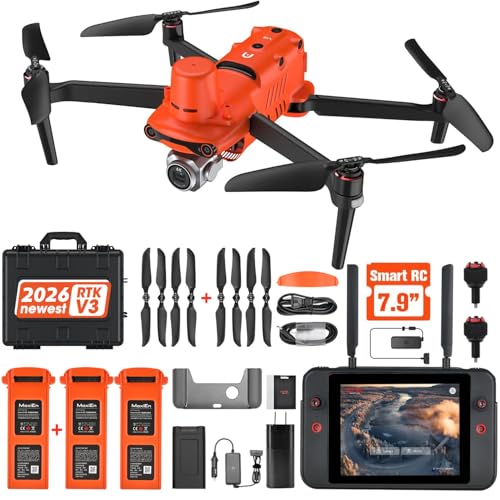
Autel EVO II Pro
Best DJI alternativeThe closest thing to a like-for-like DJI competitor, with an RTK variant for survey work. Buyers reach for Autel mainly when a DJI purchase is off the table on procurement grounds.
Check price on AmazonAffiliate link. Price and stock change constantly, so we show them only on Amazon.
- 1-inch sensor
- RTK variant for centimetre positioning
- No DJI account required
- Genuine alternative when DJI is disallowed
- Strong survey and mapping support
- Still a Chinese manufacturer, so most DJI bans catch it too
- Smaller app and accessory ecosystem
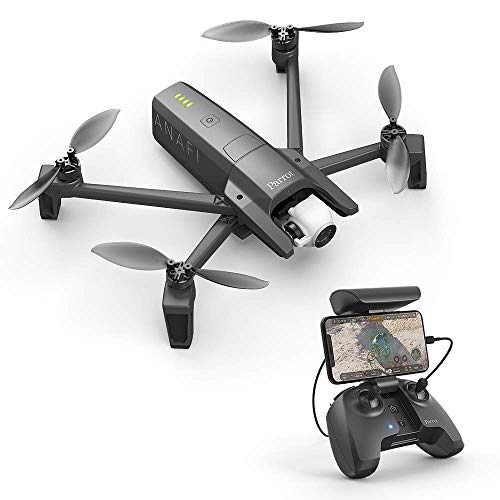
Parrot ANAFI
Best non-Chinese optionFrench-designed, and the practical answer for buyers whose procurement rules exclude Chinese manufacturers. Older and less capable than current DJI hardware, which is the price of that constraint.
Check price on AmazonAffiliate link. Price and stock change constantly, so we show them only on Amazon.
- French manufacturer
- Folding airframe
- 180-degree tilt gimbal
- Passes procurement rules that exclude Chinese drones
- Unusual straight-up gimbal tilt
- Camera and transmission lag current DJI models
- Thin accessory ecosystem

Potensic ATOM 2
Best budget alternativeUndercuts the DJI Mini line while keeping the things that matter at this price: GPS hold, a stabilised 4K camera, and sub-250 g weight. The app and transmission are where the money was saved.
Check price on AmazonAffiliate link. Price and stock change constantly, so we show them only on Amazon.
- Under 249 g
- 4K camera with gimbal
- GPS position hold
- Far cheaper than an equivalent DJI Mini
- Still avoids registration
- Transmission range well short of DJI
- Less polished app

HOVERAir X1 Pro
Better follow-cam cameraThe X1 with a materially better camera and longer range. Worth the step up only if you intend to keep the footage rather than post it once.
Check price on AmazonAffiliate link. Price and stock change constantly, so we show them only on Amazon.
- 4K action camera
- Longer range than the X1
- Enclosed propellers
- Much better image than the base X1
- Still self-flying and pocketable
- Costs close to a real camera drone
- Same limited manual control
Drones and UAS FAQs
What are the best DJI alternatives?
There is no single best DJI alternative. Start with the mission, origin requirement, authorization pathway, workflow, and support needs. Then compare companies such as Skydio, Parrot, Autel, and U.S. defense-oriented makers only on the criteria that apply to that purchase. Official company pages and current policy sources should outrank generic rankings.
Are DJI alternatives only American made drones?
No. Alternatives include non-U.S. brands, but U.S. authorization rules treat foreign-produced UAS differently from Blue UAS or Buy American pathways. “American made” is also not a single test. Separate the product comparison from the procurement and policy screen, then verify the exact model against the buyer’s written requirements.
Is Autel a safe DJI alternative in the US?
Autel can be a product alternative, but a different foreign-produced brand does not automatically remove the Covered List authorization question for new models. Review the current FCC FAQ, the model’s relevant evidence, and any local or contract-specific restrictions. “Safe” is too broad unless the buyer states whether it means legal, procurement, data, or operational fit.
Do I need to replace an existing DJI fleet immediately?
The FCC FAQ says the Covered List addition does not itself prohibit use of previously authorized models, so a policy update alone does not answer every fleet-replacement decision. Check your exact model, customer or agency rule, support plan, and future purchasing needs. The replacement decision also involves training, software, batteries, and integration costs.
Is Skydio better than Autel as a DJI alternative?
It depends which problem the switch is meant to solve. Skydio is U.S.-made and clears the Covered List authorization question outright, while Autel Robotics is Chinese-made and stays inside the same foreign-production category a DJI switch is often meant to escape. If mission fit, not origin, is the constraint, compare the two on their actual product lines instead.
Why do Skydio and Autel show up on the same DJI-alternatives list if one is U.S.-made and one is not?
They answer different parts of the same search. A "DJI alternatives" search mixes buyers who want a different mission-fit product with buyers who want a different origin/authorization status, and Skydio and Autel each solve only one of those two problems well. Naming both on one list is accurate as long as the buyer's actual constraint, mission or origin, is stated first.