Potensic ATOM 2 vs DJI Mini 4 Pro: Sub-250 Gram Drones Compared
For open-space daylight flying, the Potensic ATOM 2 is a possible substitute for the DJI Mini 4 Pro: both aircraft weigh under 249 grams, use three-axis mechanical gimbals (per this site's ATOM 2 review for the ATOM 2), and record 4K video.
Choosing between them turns on three published differences: sensor size, obstacle sensing, and transmission range.
The DJI Mini 4 Pro features a larger 1/1.3-inch sensor, omnidirectional obstacle avoidance, and up to 20 kilometers of video transmission, while Potensic states the ATOM 2 has no obstacle avoidance and rates its transmission link at 10 kilometers.
Every figure is manufacturer-stated under ideal conditions, not tested here; ATOM 2 listed prices appear below while the Mini 4 Pro price is left for the reader to check.
Potensic ATOM 2 vs DJI Mini 4 Pro Decision Points
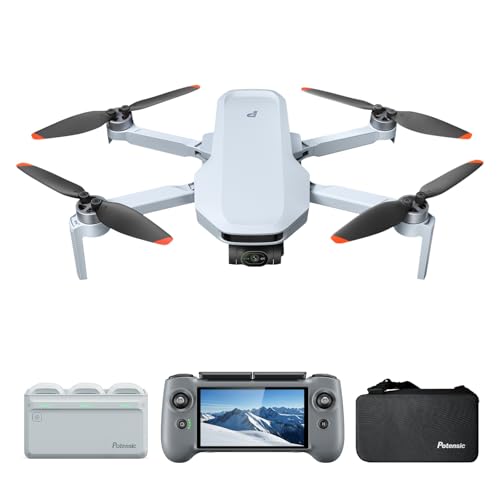
In a direct Potensic ATOM 2 vs DJI Mini 4 Pro comparison, a prospective buyer evaluates two aircraft both listed under 249 g while providing stabilized 4K aerial video. Potensic notes that training or examination is not required in most countries and regions, though pilots should check local rules via the Federal Aviation Administration.
Every specification, range measurement, and endurance figure cited on this page reflects manufacturer-disclosed data collected under ideal testing conditions. These numbers do not reflect independent flight tests or real-world battery endurance trials conducted by this site. On Potensic's official ATOM 2 product page, metrics such as flight duration rely on constant forward flight in zero-wind conditions.
Similarly, technical specifications published on DJI's Mini 4 Pro specifications page reflect controlled wind-tunnel tests and line-of-sight radio conditions that vary when operating in suburban or urban environments.
The baseline decision rests on flight safety environments and imaging requirements. Pilots operating primarily in wide-open fields during daylight hours may find the flight capabilities of the Potensic ATOM 2 sufficient.
By comparison, published specifications show the DJI Mini 4 Pro includes omnidirectional obstacle sensing, 4K recording up to 100 fps, and an O4 transmission link rated up to 20 km (FCC), whereas Potensic states the ATOM 2 has no obstacle avoidance, caps 4K at 30 fps, and rates its link at 10 km.
Specification Snapshot
Both manufacturers publish detailed specification sheets outlining physical dimensions, radio transmission protocols, camera capabilities, and flight control parameters. The table below presents side-by-side technical attributes drawn directly from each manufacturer's published technical documentation read on November 9, 2026.
| Attribute | Potensic ATOM 2 | DJI Mini 4 Pro |
|---|---|---|
| Takeoff weight | Less than 249 g (with Intelligent Flight Battery, propellers, and microSD card; actual weight may vary by batch) | Less than 249 g (standard aircraft with Intelligent Flight Battery, propellers, and microSD card) |
| Image sensor | 1/2-inch Sony CMOS, 48 MP photos, F1.8 aperture, 4-in-1 pixels | 1/1.3-inch CMOS, 48 effective MP, f/1.7 aperture, 82.1-degree FOV |
| Maximum video | 4K at 24/25/30 fps, 2.7K, FHD up to 60 fps, 1080p slow motion at 2-5x, 4K HDR | 4K up to 100 fps (slow motion), FHD up to 200 fps (slow motion), HLG and D-Log M color profiles |
| Gimbal | Mechanical 3-axis gimbal (per this site's ATOM 2 review) | 3-axis mechanical gimbal (tilt, roll, pan) |
| Obstacle sensing | No obstacle avoidance (manufacturer footnote advises open areas and pilot awareness) | Omnidirectional binocular vision system supplemented by a bottom 3D infrared sensor |
| Video transmission range | PixSync 4.0, up to 10 km, 1080p at 30 fps live view, 120 ms latency | DJI O4, up to 20 km FCC (10 km CE/SRRC/MIC), 1080p at 60 fps live view |
| Rated flight time | Up to 32 minutes (measured at constant 21.6 kph in windless conditions) | Up to 34 minutes (standard battery) or 45 minutes (Intelligent Flight Battery Plus, not sold in Europe) |
| Wind resistance | Not listed on Potensic's product page (as read November 9, 2026) | 10.7 m/s maximum wind speed resistance |
Camera and Video Capabilities
The two cameras differ most in sensor size and 4K frame rate. The Potensic ATOM 2 incorporates a 1/2-inch Sony CMOS sensor capable of capturing 48-megapixel still photographs. The optical assembly provides a fixed F1.8 aperture and utilizes a 4-in-1 pixel arrangement. For motion capture, the Potensic ATOM 2 records 4K video at 24, 25, or 30 frames per second, with 4K HDR video support.
Resolutions also include 2.7K and Full High Definition (FHD) recording at up to 60 frames per second, alongside 1080p slow-motion capture at 2x to 5x playback speeds. Additional shooting features include vertical shooting, Dolly Zoom effects, panoramas, and an AI Night mode.
The DJI Mini 4 Pro integrates a larger 1/1.3-inch CMOS sensor with 48 effective megapixels, an f/1.7 aperture, and an 82.1-degree field of view. In video modes, the DJI Mini 4 Pro captures standard 4K footage as well as high-speed 4K recording at up to 100 frames per second, which enables slow-motion playback at full 4K resolution.
In FHD resolution, the aircraft supports slow-motion recording at up to 200 frames per second. For post-production color grading, the DJI Mini 4 Pro includes HLG and D-Log M color profiles; 4K at 100 fps and the HLG and D-Log M profiles require H.265.
Stabilization mechanics maintain level horizons for both cameras during flight maneuvers. The DJI Mini 4 Pro employs an integrated 3-axis mechanical gimbal providing motorized stabilization across tilt, roll, and pan axes. While the text on Potensic's primary ATOM 2 product page does not list its gimbal type, this publication's ATOM 2 review describes the aircraft as using a mechanical 3-axis gimbal based on Potensic's published specifications.
For rapid file retrieval, the Potensic ATOM 2 supports SmartTransfer wireless offloading at speeds up to 25 megabytes per second.
Potensic ATOM 2 vs DJI Mini 4 Pro Obstacle Avoidance and Flight Safety
Obstacle sensing marks a clear difference between these two sub-250-gram aircraft. The DJI Mini 4 Pro incorporates an omnidirectional binocular vision system supplemented by a 3D infrared sensor positioned at the bottom of the airframe. DJI notes that this vision system operates effectively over surfaces featuring discernible surface patterns and ambient illumination exceeding 15 lux, with surface reflectivity above 20 percent for the downward sensor.
In contrast, Potensic states the ATOM 2 has no obstacle avoidance. Potensic notes this in a product footnote: "The drone doesn't have obstacle avoidance. When in tracking mode, please stay aware of surrounding obstacles... we recommend operating in open areas whenever possible."
For an entry-level pilot operating near tree canopies, architectural structures, or power lines, the absence of obstacle avoidance requires continuous manual vigilance and conservative flight planning. A pilot flying the Potensic ATOM 2 who initiates an automated tracking sequence must ensure an entirely clear operational volume, because the aircraft will not stop if an obstacle intersects its path.
Transmission Link and Operational Range
Video transmission technology determines live feed resolution and operational range. The Potensic ATOM 2 utilizes Potensic's proprietary PixSync 4.0 transmission system, communicating through a directional-antenna remote controller. Potensic states that PixSync 4.0 delivers a 1080p live view at 30 frames per second with a transmission latency of 120 milliseconds. Potensic rates the maximum operational distance of this link at up to 10 kilometers, its stated maximum.
The DJI Mini 4 Pro utilizes DJI's O4 video transmission protocol, which outputs a live camera stream at up to 1080p at 60 frames per second. Under Federal Communications Commission (FCC) regulatory standards in the United States, DJI rates the maximum unobstructed transmission distance at up to 20 kilometers. In regions adhering to CE, SRRC, or MIC standards, the maximum rated distance is 10 kilometers.
Published range ratings from both manufacturers represent maker ratings achieved under optimal conditions without interference. DJI publishes interference-dependent reference figures that illustrate how real-world environments attenuate transmission range. In urban environments subject to strong radio interference, DJI states expected range drops to approximately 1.5 to 4 kilometers.
When physical obstructions block line-of-sight, DJI notes transmission range reaches roughly 0.5 to 3 kilometers through tree cover, and 0 to 0.5 kilometers behind buildings. This page found no interference-dependent range figures for the ATOM 2 on the Potensic product page read for this page, so its 10 km figure should be treated as a best-case rating.
Flight Time and Battery Systems
Airborne endurance determines the number of photographic passes or flight maneuvers a pilot can execute per battery pack. The Potensic ATOM 2 delivers a rated flight time of up to 32 minutes on a fully charged battery. Potensic measured this figure during forward flight at a constant ground speed of 21.6 kilometers per hour in zero-wind conditions.
Potensic promotes a "96 minutes of flight time" figure on its product page, but this number represents the combined, sequential endurance of three separate batteries rather than a single continuous flight. For recharging multiple packs, Potensic offers a Parallel Charging Hub: Potensic's page gives 80 minutes for the hub in the accessories list and 1.3 hours in the flight-time text.
The DJI Mini 4 Pro carries a rated flight time of up to 34 minutes using its standard Intelligent Flight Battery, which features a 2,590 milliampere-hour capacity and weighs approximately 77.9 grams. DJI measured this figure in a controlled wind tunnel while maintaining a constant forward flight speed of 21.6 kilometers per hour in photo mode, with obstacle avoidance systems set to the Brake configuration.
In a stationary hover within a windless laboratory, DJI rates hover endurance at 30 minutes. DJI also publishes a maximum flight distance rating of 18 kilometers on the standard battery, measured at a constant velocity of 40.7 kilometers per hour in wind-tunnel conditions. The aircraft operates within an environmental temperature envelope spanning -10 to 40 degrees Celsius.
Battery accessories introduce a significant weight and regulatory distinction for the DJI Mini 4 Pro. DJI manufactures an optional Intelligent Flight Battery Plus, which carries a 3,850 milliampere-hour capacity and weighs approximately 121 grams. This extended pack increases rated flight time to 45 minutes, rated hover time to 39 minutes, and maximum flight distance to 25 kilometers.
Installing the Intelligent Flight Battery Plus increases the total takeoff weight beyond 249 grams, and DJI says to check and abide by local laws. DJI does not sell the Intelligent Flight Battery Plus in Europe.
Kit Configurations and Pricing
Retail packages and purchase costs distinguish what each package includes. On November 9, 2026, Potensic's official product page listed three pricing tiers for the ATOM 2: a starting configuration listed at "from USD $329.99" in its product comparison block, a Standard Kit listed at USD $359.99, and an ATOM 2 Fly More Combo listed at USD $479.99.
The Standard Kit includes one battery. The Fly More Combo supplies three batteries, the parallel charging hub, and a protective shoulder bag. Potensic also lists proprietary accessories including propeller guards, a Remote ID module (model RID-916), and a Potensic Care accident coverage policy.
The Mini 4 Pro price is not on DJI's specs page, so check DJI's store.
Who This Comparison Is Not For
This Potensic ATOM 2 vs DJI Mini 4 Pro comparison is not intended for readers who need a drone for paid work, who should consider larger platforms such as the DJI Mini 4 Pro vs Air 3S comparison.
Similarly, this comparison is not designed for readers who need a drone for low light, who may explore other DJI alternatives, nor for readers seeking a buy or sell call on any company, as this page is a drone specification comparison with no company ratings.
What Would Change Our Answer
The comparative assessment outlined here would shift if Potensic adds obstacle sensing while preserving its sub-250-gram weight and pricing.
Conversely, if DJI's current Mini 4 Pro price falls close to the ATOM 2 listed prices, any cost advantage of the ATOM 2 would narrow. Finally, independently verified flight benchmarks evaluating radio link stability in dense urban RF environments could refine current understanding of real-world transmission margins beyond manufacturer-stated line-of-sight ratings.
How to Use This Comparison
Before finalizing a purchasing decision between the Potensic ATOM 2 and the DJI Mini 4 Pro, review the technical documentation on Potensic's product page and DJI's specifications page.
Flight regulations vary across municipal, state, and national jurisdictions: verify local airspace restrictions, operator registration mandates, and Remote ID compliance standards on official aviation portals such as the FAA UAS registration system before deploying any aircraft into active airspace.
Where To Buy
The models below are the ones we point readers at, listed in the order we would consider them.
Potensic ATOM 2
Best budget alternativeUndercuts the DJI Mini line while keeping the things that matter at this price: GPS hold, a stabilised 4K camera, and sub-250 g weight. The app and transmission are where the money was saved.
Check price on Amazon- Under 249 g
- 4K camera with gimbal
- GPS position hold
- Far cheaper than an equivalent DJI Mini
- Still avoids registration
- Transmission range well short of DJI
- Less polished app

DJI Mini 4 Pro
Best sub-250g droneUnder 250 g, which in the US drops it out of the FAA registration requirement for recreational flight, while still carrying obstacle sensing on every axis. The default first drone for most people.
Check price on Amazon- Under 250 g takeoff weight
- Omnidirectional obstacle sensing
- 4K/60 HDR camera
- Avoids registration in most jurisdictions
- Obstacle sensing on every axis
- Light airframe struggles in real wind
- Locked into the DJI ecosystem
Drones and UAS FAQs
Is the Potensic ATOM 2 as good as the DJI Mini 4 Pro?
The Potensic ATOM 2 matches the DJI Mini 4 Pro in basic flight categorization by remaining under 249 grams, using a 3-axis mechanical gimbal (per this site's ATOM 2 review for the ATOM 2), and recording 4K video.
However, the Mini 4 Pro lists a larger sensor, omnidirectional obstacle sensing, and 4K up to 100 fps, alongside an O4 transmission link rated up to 20 km under FCC rules; Potensic states the ATOM 2 has no obstacle avoidance, a 1/2-inch sensor, and a 10 km PixSync 4.0 link.
Does the Potensic ATOM 2 have obstacle avoidance?
No, the Potensic ATOM 2 does not have obstacle avoidance. Potensic notes in a product page footnote that the drone lacks obstacle avoidance and advises operators to remain aware of their surroundings and fly in open areas, particularly when utilizing automated tracking modes.
Which has the better camera, the ATOM 2 or the Mini 4 Pro?
The DJI Mini 4 Pro lists a larger sensor and higher 4K frame rates, featuring a larger 1/1.3-inch CMOS sensor with an f/1.7 aperture and support for 4K video recording up to 100 fps in slow motion, alongside HLG and D-Log M color profiles.
The Potensic ATOM 2 features a smaller 1/2-inch Sony CMOS sensor with an F1.8 aperture, recording 4K video capped at 30 fps, with 4K HDR and FHD recording up to 60 fps.
Does the ATOM 2 weigh less than 250 grams?
Yes, Potensic states that the standard ATOM 2 takeoff weight is less than 249 grams, including the Intelligent Flight Battery, propellers, and a microSD card. Potensic notes that actual weight may vary by batch and says training or examination is not required in most countries and regions.
What does the ATOM 2's 96-minute flight time mean?
The advertised 96-minute flight time represents the combined flight endurance of three separate batteries flown sequentially, not a single continuous flight. A single Potensic ATOM 2 battery is rated for up to 32 minutes of flight time under windless test conditions at a constant speed of 21.6 kph. The Fly More Combo includes three batteries, and the 96 minutes is the three-battery total, not a single flight.