DJI Mavic 4 Pro vs Air 3S: Comparing Two Prosumer Drones
Pilots deciding between the DJI Mavic 4 Pro and the DJI Air 3S face a choice between a 1,063-gram three-camera aircraft and a 724-gram dual-camera aircraft.
This comparison, built from published specifications, finds that the Air 3S suits most buyers who want strong imagery without extra pack weight, while the Mavic 4 Pro justifies its additional 339 grams for work that demands a larger sensor and longer reach.
Both aircraft exceed the registration weight floor in the United States, meaning administrative requirements remain identical.
Direct Answer: Choosing Between the Mavic 4 Pro or Air 3S
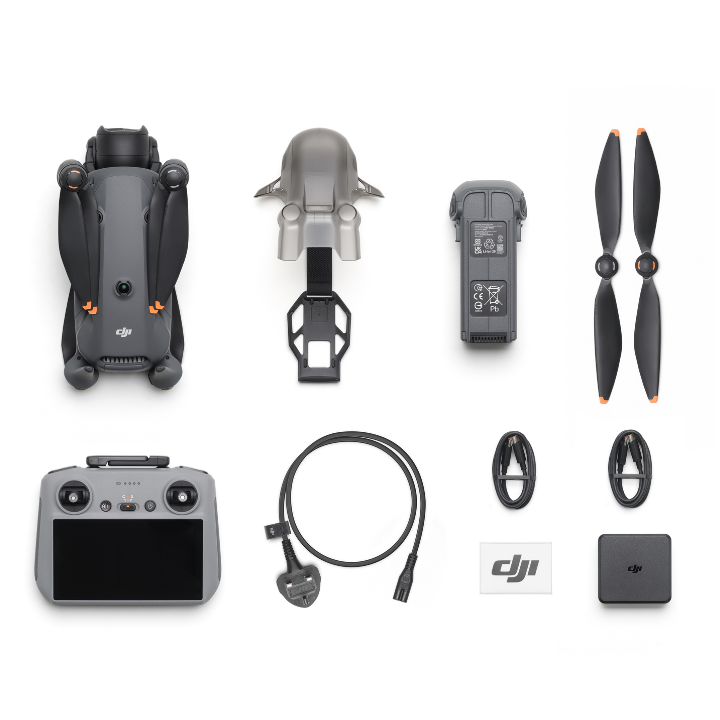
A buyer should select the DJI Air 3S unless an operational brief explicitly requires capabilities found exclusively on the DJI Mavic 4 Pro. Those exclusive capabilities include a 4/3-inch 100-megapixel Hasselblad primary camera recording 6K video at 60 frames per second, a dedicated long telephoto lens, 51 minutes of manufacturer-rated flight time, and 30 kilometers of rated transmission range.
For most personal and light paid work, the Air 3S provides a dual-camera payload with 4K recording at a lower airframe weight.
Both aircraft cross the 250-gram threshold established by the Federal Aviation Administration (FAA). As a result, questions of regulatory exemption do not separate these two models. Operators must complete the same registration process and broadcast the same Remote Identification (Remote ID) signals.
The choice comes down to camera and range needs, carry weight, and US supply. While the Air 3S features a 1-inch Complementary Metal-Oxide-Semiconductor (CMOS) sensor and a 1/1.3-inch medium telephoto camera, the Mavic 4 Pro adds a third optical sensor and a larger 4/3-inch main sensor.
Additionally, buyers in the United States must account for federal authorizations: the Mavic 4 Pro received regulatory clearance before DJI was placed on the Covered List published by the Federal Communications Commission (FCC) in December 2025, which affects the availability of subsequent product generations. Because availability and support can change, confirm the current FCC status and the seller before buying.
Specification Snapshot: DJI Mavic 4 Pro vs Air 3S
The table below compares the two aircraft on cameras, flight time, range, sensing and weight. The Air 3S measurements come directly from the published DJI Air 3S specifications, while data points for the Mavic 4 Pro reflect reported launch coverage and the Heliguy Mavic 4 Pro comparison table.
| Attribute | DJI Mavic 4 Pro | DJI Air 3S |
|---|---|---|
| Takeoff weight | 1,063 grams | 724 grams |
| Main wide camera | Hasselblad 4/3-inch CMOS, 100 MP effective | 1-inch CMOS, 50 MP |
| Medium tele camera | 1/1.3-inch CMOS, 48 MP | 1/1.3-inch CMOS, 48 MP (70 mm equivalent per DJI) |
| Long tele camera | 1/1.5-inch CMOS, 50 MP | None |
| Maximum video resolution | Hasselblad 6K/60 fps HDR or 4K/120 fps | 4K/60 fps HDR or 4K/120 fps |
| Rated maximum flight time | 51 minutes (manufacturer benchmark) | 45 minutes (wind-tunnel benchmark) |
| Maximum transmission distance (FCC) | 30 kilometers | 20 kilometers |
| Obstacle sensing system | 0.1 lux nightscape omnidirectional, forward LiDAR | Omnidirectional, forward-facing LiDAR |
| Internal storage capacity | Not confirmed | 42 GB |
| United States registration | Mandatory (exceeds 250 grams) | Mandatory (exceeds 250 grams) |
Air 3S vs Mavic 4 Pro Camera Systems Compared
The cameras are the biggest difference between the two aircraft. The DJI Air 3S uses a dual-camera imaging system consisting of a 50-megapixel primary camera built around a 1-inch CMOS sensor, paired with a 48-megapixel medium telephoto camera utilizing a 1/1.3-inch CMOS sensor. DJI identifies the medium telephoto focal length as a 70-millimeter equivalent.
The DJI Mavic 4 Pro expands the imaging array to a three-camera module bearing Hasselblad branding. Its primary wide-angle unit integrates a 4/3-inch CMOS sensor capable of capturing 100-megapixel effective stills and recording video at 6K resolution at 60 frames per second in High Dynamic Range (HDR), alongside 4K recording up to 120 frames per second.
Beyond its primary sensor, the Mavic 4 Pro carries two telephoto cameras rather than one. Alongside a 1/1.3-inch 48-megapixel medium telephoto module that mirrors the resolution of the secondary sensor on the Air 3S, the Mavic 4 Pro incorporates a dedicated third camera featuring a 1/1.5-inch 50-megapixel sensor. Press reports describe these three focal lengths as approximately 28-millimeter, 70-millimeter, and 168-millimeter equivalents.
Video recording formats on the Mavic 4 Pro allow the medium telephoto to record 4K at 60 frames per second HDR or 4K at 120 frames per second, while the long telephoto captures 4K at 60 frames per second HDR or 4K at 100 frames per second. The Mavic 4 Pro also features an infinity gimbal design supporting 360-degree continuous rotation.
Flight Time, Range, and Obstacle Sensing Capabilities
Manufacturer ratings place the flight endurance of the Mavic 4 Pro ahead of the Air 3S, though real-world operational factors reduce both numbers. DJI specifies a maximum flight time of 45 minutes for the Air 3S, alongside a maximum hovering endurance of 41 minutes. The manufacturer determined that 45-minute figure in a controlled wind tunnel under test conditions equivalent to windless flight at sea level.
The Mavic 4 Pro carries a manufacturer-rated endurance of 51 minutes, giving it a 6-minute nominal advantage on paper.
Rated flight times are manufacturer benchmarks, not real flight profiles. Sustained hovering, climbing, wind, and cold shorten flight times.
Transmission protocols also favor the heavier airframe on paper. The Air 3S features an FCC-rated maximum transmission range of 20 kilometers, whereas the Mavic 4 Pro uses an upgraded O4+ video transmission architecture providing up to 30 kilometers of range under FCC standards with 10-bit HDR video feeds.
In terms of environmental resistance, DJI rates the Air 3S to withstand maximum wind speeds of 12 meters per second. A Mavic 4 Pro wind-resistance figure was not confirmed for this page, so check DJI's own Mavic 4 Pro specification page before assuming a limit equal to the Air 3S's 12 m/s.
Obstacle detection systems on both platforms combine optical sensors with Light Detection and Ranging (LiDAR) hardware. The Air 3S incorporates omnidirectional obstacle sensing coupled with a forward-facing LiDAR module. The Mavic 4 Pro features a 0.1 lux nightscape omnidirectional obstacle sensing system supported by forward-facing LiDAR.
Weight, Registration, and FAA Remote ID Requirements
The DJI Air 3S weighs 724 grams in standard flight configuration, whereas the DJI Mavic 4 Pro weighs 1,063 grams. The resulting arithmetic difference is 339 grams. That weight difference matters for travel and carry, not for registration.
The difference in mass does not create any regulatory distinction within United States airspace. The FAA requires all unmanned aircraft weighing more than 250 grams to complete official registration before operation. Because both the 724-gram Air 3S and the 1,063-gram Mavic 4 Pro exceed this threshold, operators must register both models through the official FAA drone registration system.
Mandatory registration simultaneously triggers federal broadcast rules. Under federal aviation regulations, any aircraft required to register with the FAA must also comply with Remote ID rules. Pilots operating either airframe must verify compliance with FAA Remote ID rules before flying. Registration does not separate the two, so base the choice on camera and weight.
United States Availability, FCC Rules, and Support Status
US buyers also need to check availability, because of FCC action against DJI. In December 2025, the FCC added DJI to its Covered List, an administrative action that effectively blocks newly introduced DJI drone models from receiving required FCC equipment authorizations in the United States. As reported, the DJI Mini 5 Pro and the DJI Air 4 have no confirmed United States launch date.
The Mavic 4 Pro sits outside that freeze as reported. The Mavic 4 Pro was reported to have cleared FCC equipment authorization before DJI's December 2025 addition to the Covered List. As reported, under FCC Public Notice DA-26-69, drones authorized before December 22, 2025 can keep receiving firmware and software updates in the United States.
Sources disagree on how far the restrictions reach, and DJI is challenging the Covered List action. Retail availability varies widely across commercial distributors and specialized drone dealers. Before paying, check the current FCC status of the model and confirm the seller's stock, firmware support and bundle contents.
Who This Comparison Is Not For
This comparison does not apply to buyers bound by procurement rules that exclude Chinese-manufactured aircraft. Organizations restricted by legislation or corporate policy that bans Chinese-manufactured unmanned aircraft cannot procure either platform, and those buyers should see the DJI alternatives page for compliant platforms.
Buyers who want an aircraft under the 250 g registration threshold are outside this comparison, because both aircraft here are over it. The Air 3S and Mavic 4 Pro are mid-weight and heavy prosumer platforms; pilots prioritizing minimal weight and regulatory exemptions see the DJI Mini 4 Pro review or check published DJI Mini 4 Pro specifications.
Finally, this analysis does not serve individuals searching for specific street prices. Pricing structures vary across geographic regions and bundles.
What Would Change Our Answer
The recommendation to favor the Air 3S for general operations rests on current regulatory status, hardware specifications, and prices that vary by seller and bundle. Several developments would alter this verdict. First, a change in DJI's FCC status, such as the Covered List action being reversed or a new DJI model receiving US authorization, would change the US availability picture.
Second, if a drop in the Mavic 4 Pro's price (prices vary by seller and bundle) closed most of the gap with the Air 3S, the cost of the 4/3-inch Hasselblad camera and the roughly 168 mm-equivalent long tele would matter less.
Third, an operator whose operational profile shifts from self-funded creative content to high-end commercial client production changes what the work needs. In commercial production, costly client reshoots can justify the higher-end hardware. When client deliverables demand 6K master capture or the reach of the long tele, the Mavic 4 Pro is the better fit, even with the extra 339 g.
How to Use This Comparison: Final Takeaway and Next Steps
When weighing the DJI Mavic 4 Pro vs Air 3S, match the aircraft to the financial structure of the work. The Air 3S remains the logical selection for most personal and light paid work. Its 724-gram takeoff weight aids carry, its dual cameras deliver 4K video, and it includes 42 GB of internal storage.
The DJI Mavic 4 Pro serves operators whose client work justifies its higher weight and capabilities. Its 1,063-gram airframe demands dedicated transport planning, but it has a 4/3-inch 100 MP main sensor, 6K/60 HDR capture, three focal lengths and 0.1 lux nightscape sensing. The extra weight is justified when client work requires 6K Hasselblad footage, longer reach, or low-light margin.
This comparison draws entirely from manufacturer technical sheets, regulatory announcements, and retailer specification databases rather than independent flight testing conducted by this site. Before placing an order, buyers should verify retail inventory, inspect bundle contents, check firmware support status, and review the manufacturer specification sheets on the official DJI Air 3S specifications portal and the Heliguy Mavic 4 Pro comparison table.
Where To Buy
The models below are the ones we point readers at, listed in the order we would consider them.

DJI Mavic 4 Pro
Best image qualityThe flagship, and the one to buy if the footage is the deliverable rather than the hobby. Three cameras and the largest sensor in the folding line, at a price that only makes sense for paid work.
Check price on Amazon- Triple-camera system
- Flagship sensor and transmission
- Folding airframe
- Best image quality DJI ships in a folding drone
- Long range and flight time
- Costs multiples of the Air line
- Overkill for hobby flying

DJI Air 3S
Best all-round camera droneThe step up that buys a larger sensor and dual cameras without the flagship price. Over 249 g, so registration applies. Take that as the real cost of the image quality.
Check price on Amazon- Dual-camera system with a 1-inch main sensor
- Omnidirectional sensing
- Over 249 g
- Much better low-light image than the Mini line
- Two useful focal lengths
- Requires FAA registration
- Bulkier to carry than a Mini
Drones and UAS FAQs
Is the Mavic 4 Pro worth it over the Air 3S?
The Mavic 4 Pro is worth the investment only if an operator requires a 4/3-inch 100-megapixel primary sensor, 6K HDR video recording, or a roughly 168 mm-equivalent long tele. For most personal and light paid work, the 724-gram Air 3S provides capable dual cameras without the extra 339 grams of weight.
Do the Mavic 4 Pro and Air 3S both need to be registered?
Both drones require mandatory registration with the FAA in the United States. The Air 3S weighs 724 grams and the Mavic 4 Pro weighs 1,063 grams, placing both aircraft well above the FAA 250-gram registration threshold. Both models must also comply with federal Remote ID broadcast rules.
Which has the better camera, the Mavic 4 Pro or the Air 3S?
The Mavic 4 Pro features a larger primary sensor and three optical cameras, led by a 4/3-inch 100-megapixel Hasselblad sensor that records 6K video at 60 frames per second, plus a 48 MP medium tele and a 50 MP long tele that press coverage puts at about 70 mm and 168 mm equivalent.
Which flies longer, the Mavic 4 Pro or the Air 3S?
The Mavic 4 Pro carries a higher manufacturer flight endurance rating at 51 minutes, compared to 45 minutes for the Air 3S. Both numbers reflect manufacturer benchmarks rather than operational flight profiles. Hovering, climbing, wind, and cold cut flight times on both airframes.
Can you still buy a Mavic 4 Pro in the US?
Retail availability varies by seller. The Mavic 4 Pro was reported to have cleared FCC authorization before DJI's December 2025 addition to the Covered List, and under FCC Public Notice DA-26-69, as reported, drones authorized before December 22, 2025 can keep receiving firmware and software updates. Sources disagree on how far the restrictions reach, so check the current FCC status and the seller before buying.