ISV-9 vs ISV-U Infantry Squad Vehicle Variants Compared
The Infantry Squad Vehicle (ISV) comes in two variants: the ISV-9 seats nine and the ISV-U seats five and adds a utility bed. The ISV-U also adds a 4,000-watt inverter and a kit for carrying non-ambulatory patients. Both variants carry a 5,000 lb payload.
The US Army's October 2026 market survey, reported by Defense News, asks industry about 20,787 more vehicles: 9,003 ISV-9 and 11,784 ISV-U. Inside Defense reports that the Army is eyeing July 2028 for a 10-year contract award. GM Defense builds both variants today. No price, solicitation or winner for the new volume appears in the reporting.
ISV-9 vs ISV-U Compared
The ISV-9 vs ISV-U difference comes down to seats and utility equipment: the ISV-9 carries nine passengers, and the ISV-U carries five plus a utility bed for cargo. Both have a 5,000 lb payload, according to the survey details reported by Defense News. The ISV-U adds a 4,000-watt inverter with multiple outlets, towing capacity up to 6,500 lb and a kit for carrying non-ambulatory patients.
The ISV-U is the larger share of the survey. The Army lists 11,784 ISV-U against 9,003 ISV-9, a gap of 2,781 vehicles.
A winch appears on both variants in one form or another. The survey lists an integrated winch as a baseline military modification for both vehicles, and it also names a winch among the ISV-U features. GM Defense's latest contract modification covers an ISV-U Utility Winch Kit, which the table below notes.
| Feature | ISV-9 | ISV-U |
|---|---|---|
| Passengers | Nine | Five |
| Payload | 5,000 lb | 5,000 lb |
| Utility bed for cargo | Not listed | Yes |
| Winch | Integrated winch (baseline modification for both) | Winch listed as an ISV-U feature, with a Utility Winch Kit on contract |
| Inverter | Not listed | 4,000-watt with multiple outlets |
| Towing capacity | Not listed | Up to 6,500 lb |
| Non-ambulatory patient kit | Not listed | Yes |
| Survey quantity | 9,003 | 11,784 |
What the Army's Market Survey Asks For
The Army's market survey asks industry whether it can build an estimated 20,787 Infantry Squad Vehicles, split into 9,003 ISV-9 and 11,784 ISV-U. The survey ties that estimate to fund availability and to requirements from the Army, sister services and potential Foreign Military Sales (FMS) customers. The Army says it will use the results to determine the feasibility of "several procurement pathways."
A market survey gathers information from industry. It places no order and sets no price. Neither Defense News nor Inside Defense reports a solicitation or request for proposals for the 20,787 vehicles.
Inside Defense describes the same requirement as roughly 20,800 additional ISVs, which is 20,787 rounded. The defense procurement guide covers how contract types work and the steps from market survey to solicitation.
The Volume and Timeline
The survey's production table starts with 106 vehicles in fiscal year (FY) 2028 and runs at about 2,000 vehicles a year after that. Inside Defense reports that the Army is eyeing July 2028 for a 10-year contract award, with first deliveries targeted for the fourth quarter of FY2029. Inside Defense puts FY2029 at 2,119 vehicles.
Defense News puts the end of the production table at FY2036, and Inside Defense puts it at FY2038. Neither article explains the gap, so the final year is unresolved in the public reporting.
The Army's existing acquisition objective is 11,582 ISVs, including 606 ISV-Heavy, according to Inside Defense. Inside Defense says the potential 2028 award would reach nearly two times that figure. Added together, 11,582 plus 20,787 comes to 32,369 vehicles.
| Fiscal year | Defense News | Inside Defense |
|---|---|---|
| FY2028 | 106 vehicles | 106 vehicles |
| FY2029 | About 2,000 to 2,100 | 2,119 vehicles |
| Later years | About 2,000 to 2,100 per year | Near 2,000 per year |
| Final year of table | FY2036 | FY2038 |
What Vendors Were Asked to Price and Provide
The survey asks vendors to price four production rates, assess multiyear buying, offer full data rights and say whether they can add autonomy. Those requests, drawn from Defense News and Inside Defense, are listed below.
The four volume bands let the Army evaluate economy-of-scale thresholds, which is the purpose Defense News gives for the request. The data-rights request covers technical and logistical data, test information, electrical diagrams and supporting hardware. For the Pentagon's separate autonomous-systems effort, see the Replicator initiative explainer.
- Cost estimates at annual volumes of 100, 500, 1,000 and 1,500-plus units per year.
- Whether multiyear procurement would offer "measurable value" compared with annual buys or priced options, with projected cost savings.
- Unlimited rights to technical and logistical data, test information, electrical diagrams and supporting hardware.
- Whether the vendor can provide a semi-autonomous system, and what an autonomy kit would cost.
Who Builds the Infantry Squad Vehicle
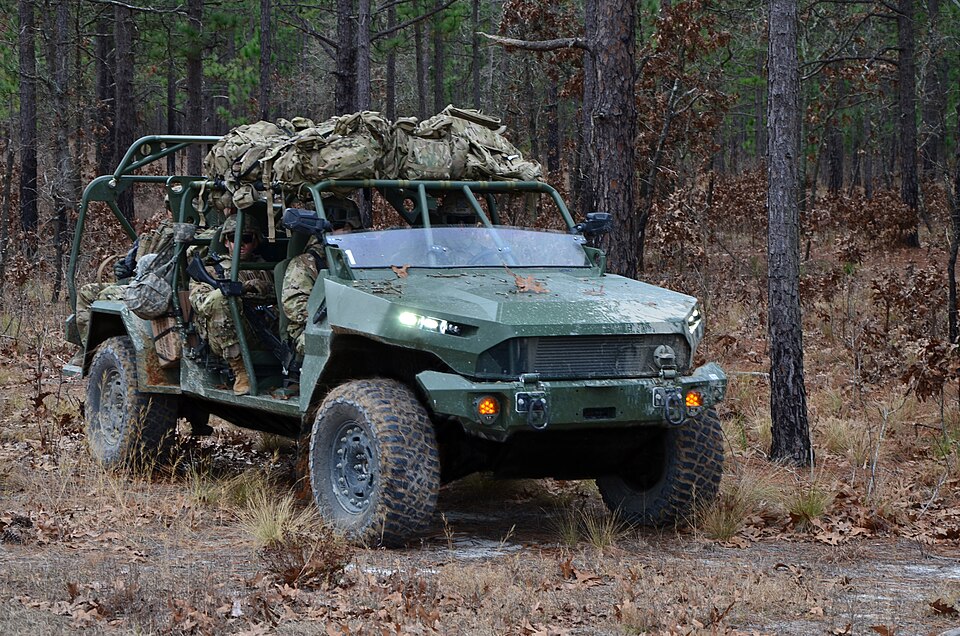
GM Defense builds the Infantry Squad Vehicle today, on the commercial Colorado and Silverado pickup lineage. Inside Defense reports that GM Defense produces the ISV-9 and ISV-U under full-rate production. On 12 October 2026, GM Defense announced that the Army had expanded its ISV orders from an initial 649 to nearly 12,000.
In the month before the survey was reported, GM Defense received a $697.7 million contract modification for ISV-U engineering changes and the ISV-U Utility Winch Kit. That brought the cumulative contract value to $915.6 million. Subtracting the modification leaves $217.9 million as the cumulative value before it.
The Army requested $527 million for 2,418 ISVs in FY2027, according to Inside Defense. No source gives a unit price.
A separate ISV-Heavy competition includes GM Defense, Ford Motor Co. and one other maker. It launched in July, and prototype deliveries are expected by March. The 20,787-vehicle survey covers only the ISV-9 and ISV-U.
Shared Requirements for ISV-9 and ISV-U
Both variants must meet the same weight, speed and mobility requirements, according to the survey details in Defense News. Each has a maximum curb weight of 5,200 lb and a gross vehicle weight rating of up to 10,200 lb. Each must give passengers full rollover protection.
Both vehicles must reach up to 55 mph on good paved roads and 17 mph cross-country. Both must traverse longitudinal grades up to 60%. The survey lists the following baseline military modifications for both variants.
- Blackout lights
- A 24V electrical system and a main power disconnect
- Run-flat tires
- Fording of salt and fresh water
- Lift and tie-down provisions to military standard (MIL-STD) 814 and MIL-STD-209K
- 24V NATO slave receptacles on the front and rear bumpers
- An integrated winch
- Petroleum, oil and lubricants (POL) compatibility
What the Sources Leave Undecided
The Defense News and Inside Defense accounts leave the price, the buying method and the response deadline unpublished. The table lists each open question and what the reports say.
| Question | What the sources say |
|---|---|
| Survey response deadline | Not stated in either article |
| Unit price or cost estimate | Not published |
| Contract value for the new volume | Not published |
| Solicitation or request for proposals | None reported. The document is a market survey |
| Competition or extension of GM Defense | Not decided. The Army cites "several procurement pathways" |
| Last year of production table | FY2036 (Defense News) or FY2038 (Inside Defense) |
What Would Change the ISV Picture
The survey is a request for information. The Army says the requirement depends on fund availability and that results will inform "several procurement pathways," and no contract, price or winner exists for the 20,787 vehicles. GM Defense builds the vehicle today, so any award turns on whether the Army competes the new volume or extends the current maker.
A reader looking for a vehicle price or a likely winner will not find either in this reporting. Three events would change the picture: a published solicitation or contract notice, a funded FY2028 line, or an announced competition. The US defense budget guide shows where an FY2028 line would appear.
Read the full reports at Defense News and Inside Defense, then watch for a solicitation for the 20,787 vehicles.
Guides FAQs
What is the difference between the ISV-9 and the ISV-U?
The ISV-9 carries nine passengers, and the ISV-U carries five plus a utility bed for cargo. The ISV-U also adds a 4,000-watt inverter, towing capacity up to 6,500 lb and a kit for carrying non-ambulatory patients. Both have a 5,000 lb payload and share the same weight, speed and rollover requirements.
How many Infantry Squad Vehicles does the Army want?
The Army's market survey estimates a requirement of 20,787 more vehicles: 9,003 ISV-9 and 11,784 ISV-U. That estimate depends on fund availability and requirements from the Army, sister services and potential FMS customers. The existing acquisition objective is 11,582 ISVs, including 606 ISV-Heavy.
Who makes the Infantry Squad Vehicle?
GM Defense makes the Infantry Squad Vehicle, on the commercial Colorado and Silverado pickup lineage. It produces the ISV-9 and ISV-U under full-rate production, and GM Defense announced on 12 October 2026 that the Army had expanded its orders from 649 to nearly 12,000.
How much does an Infantry Squad Vehicle cost?
Neither Defense News nor Inside Defense publishes a unit price for the Infantry Squad Vehicle. The published figures are contract totals: GM Defense's cumulative contract value of $915.6 million after a $697.7 million modification, and an FY2027 Army request of $527 million for 2,418 ISVs. The new survey asks vendors for cost estimates at four volumes, and no answers have been published.
What is the top speed of the Infantry Squad Vehicle?
The survey requires both variants to reach up to 55 mph on good paved roads and 17 mph cross-country. Both must also traverse longitudinal grades up to 60%.
When will the Army award the new ISV contract?
The Army is eyeing July 2028 for a 10-year contract award for roughly 20,800 additional ISVs, according to Inside Defense. First deliveries are targeted for the fourth quarter of FY2029. Neither report mentions a solicitation, and the survey response deadline is not stated.
Can the Infantry Squad Vehicle be autonomous?
The survey asks vendors whether they can provide a semi-autonomous system and what an autonomy kit would cost. Neither source describes an autonomous ISV variant as planned.